


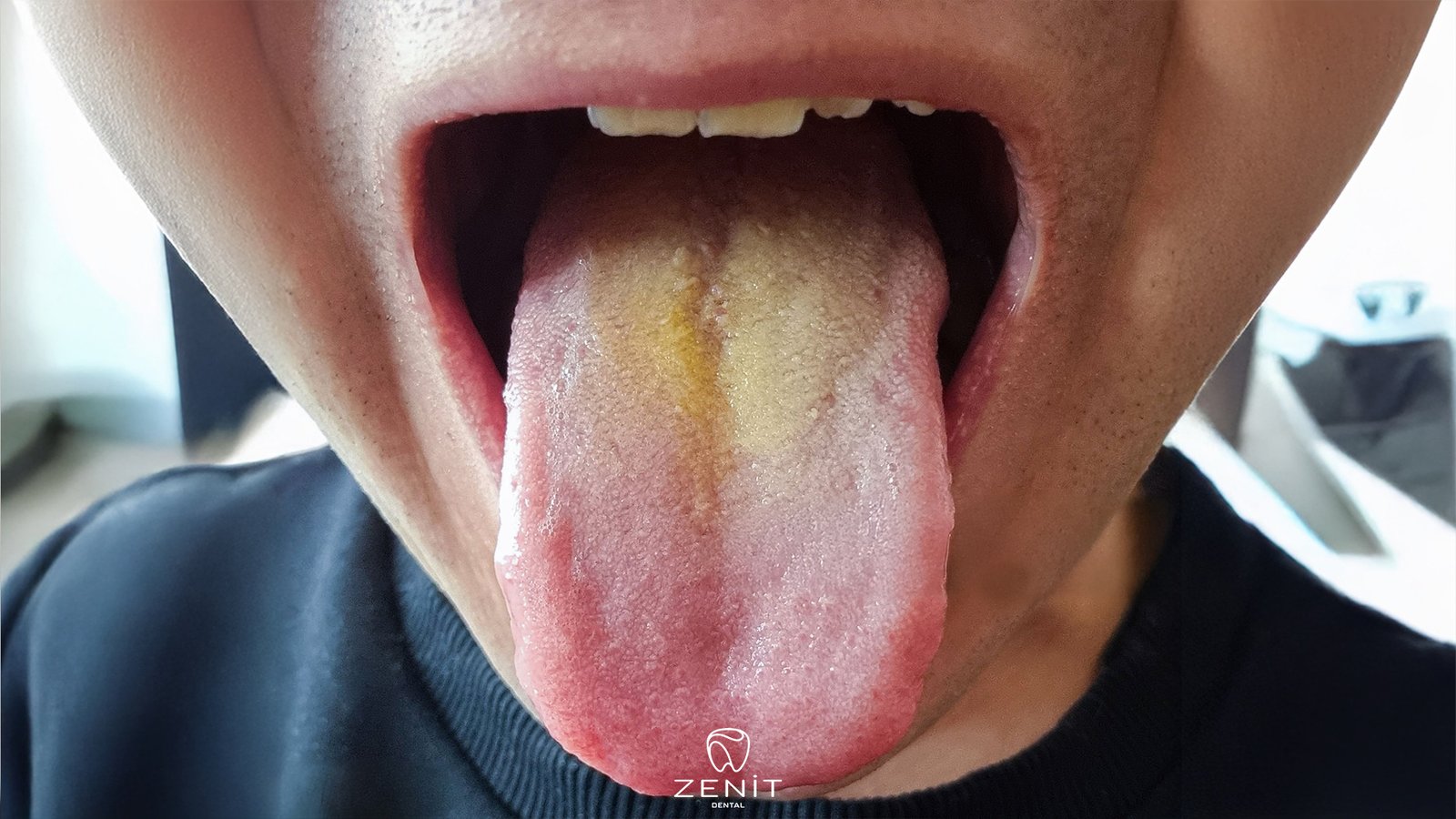
Causes of Yellow Tongue: What’s Behind That Yellow Coating?
Have you ever caught yourself glancing at your tongue while brushing your teeth in the morning and thinking, “Why does this look yellow?” Especially if it’s not just for one day, but something you’ve noticed for several mornings in a row… Add an unpleasant taste or bad breath to the mix, and it’s only natural to feel a bit uneasy. Some people shrug it off and say, “It’ll pass,” while others head straight to the internet and start reading worst-case scenarios. The truth is, a yellow tongue is usually not as scary as it seems but it’s also not something that should be completely ignored.
Your tongue is like a small but powerful mirror of your oral health and sometimes even your overall health. What you eat and drink, how well you care for your mouth, and even your lifestyle can all reflect on its surface. Sometimes it’s that extra cup of coffee, sometimes neglected oral care, and sometimes it’s your body quietly saying, “Something’s not quite right.” In most cases, a yellow tongue has simple and manageable causes, but occasionally it can be a sign that deserves a little more attention.
In this article, we’ll calmly walk through questions like why the tongue turns yellow, which situations are considered normal, when it’s time to see a professional, and what you can do at home. Our goal isn’t to scare you on the contrary, it’s to help you understand and correctly read these small signals your body gives you.
Why Does the Tongue Turn Yellow?
At first glance, the tongue may look like a smooth surface, but in reality it has a very textured and dynamic structure. It’s covered with tiny projections called “papillae,” which appear pink to red in a healthy mouth. Throughout the day, however, everything that passes through your mouth food, drinks, even the way you breathe can leave traces on these small structures.
When oral hygiene isn’t maintained properly, bacteria, dead cells, and food particles can easily settle between these papillae. Over time, this layer thickens and covers the tongue’s natural color. As a result, the tongue may appear whitish, yellow, or even slightly brown. In most cases, what you’re seeing isn’t the tongue itself, but the buildup sitting on its surface.
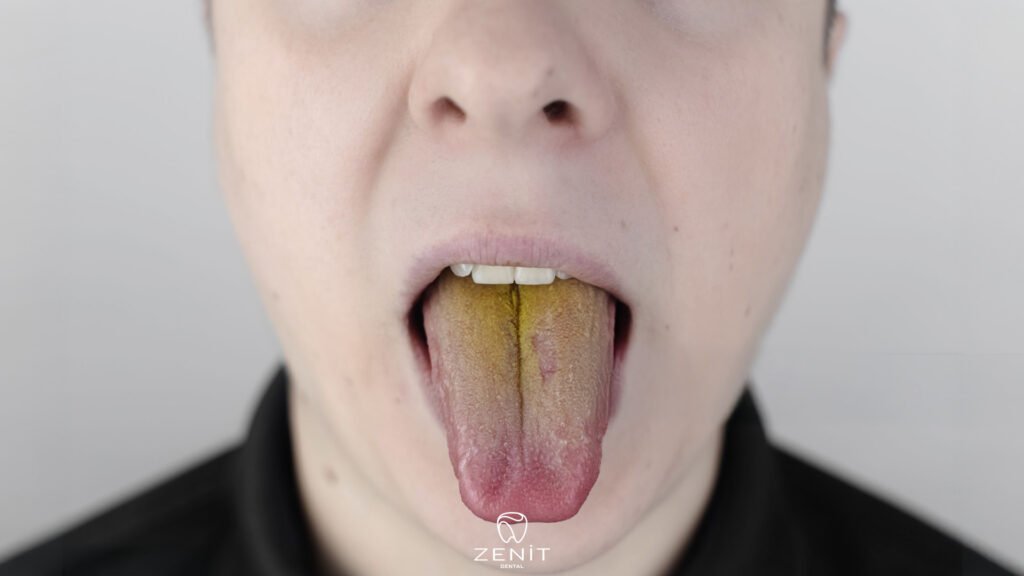
That’s why a yellow tongue usually isn’t a sudden or mysterious problem it’s the visible result of a buildup that develops slowly over time. The real question is why that buildup formed in the first place. Was oral care neglected? Are you not drinking enough water? Or is your body trying to send a different kind of signal? If your tongue’s color is making you ask these questions, it might be time to pause and pay attention.
Poor Oral Hygiene
Let’s start with the most common and often harmless cause: poor oral hygiene. Many people think brushing their teeth once or twice a day is enough. But the tongue is usually the quiet part of the routine that gets skipped. Ironically, it’s one of the favorite places for bacteria to settle.
When the tongue isn’t cleaned regularly, bacteria multiply quickly. Combine that with dead cells shed during the day and leftover food particles, and a visible layer begins to form on the tongue. Over time, this layer covers the tongue’s natural pink color and creates a yellowish appearance. In simple terms, it’s fair to say the tongue has just gotten “dirty.”
This yellow coating is especially noticeable in the morning. During sleep, saliva production decreases, which slows down the mouth’s natural cleaning process. As the mouth becomes drier, bacteria thrive more easily. That’s why seeing a yellow tongue in the mirror after waking up is very common and in most cases, it improves quickly with proper tongue cleaning.
Smoking and Tobacco Use
When it comes to smoking and other tobacco products, a yellow tongue is unfortunately not surprising. The chemicals in tobacco smoke stick to the surface of the tongue with every inhale and gradually build up. This isn’t just a temporary stain regular use can cause the tongue’s color to become permanently darker and more yellow over time. The same applies to hookah, cigars, and even chewing tobacco.
There’s also a less visible side to this issue. Smoking dries out the mouth and reduces saliva production. Saliva is the mouth’s natural cleaning system, and when it decreases, bacteria multiply much more easily. On top of that, the balance of bacteria in the mouth is disrupted, allowing harmful bacteria to dominate. The result is not only a yellow tongue but also persistent bad breath.
So in many cases, a yellow tongue isn’t the main problem it’s simply the most obvious sign of the chain reaction smoking creates inside the mouth. It’s the tongue’s way of saying, “Something here isn’t quite right.”
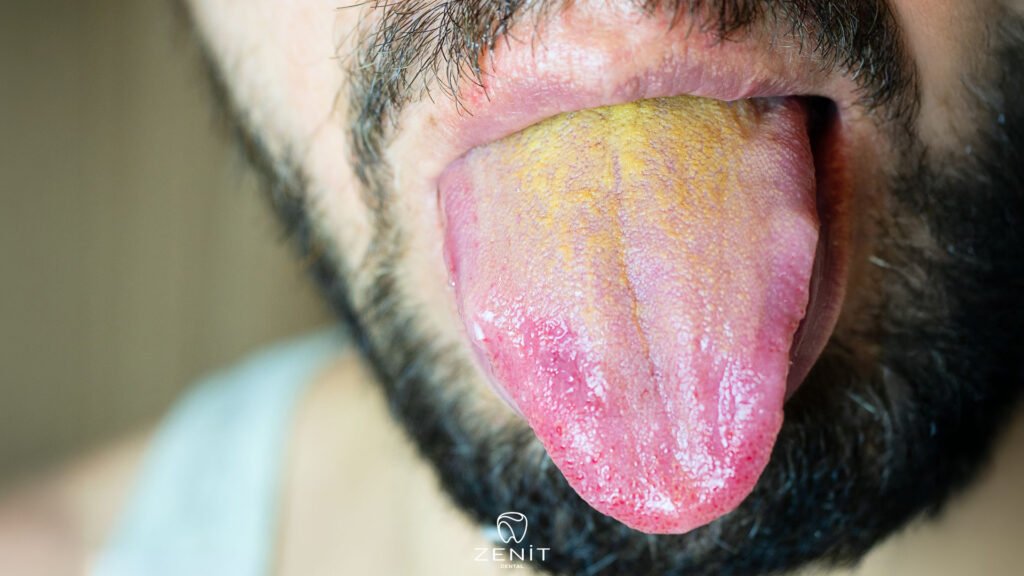
The most important element that keeps the mouth clean is saliva. When saliva production decreases, this natural balance is disrupted and the mouth becomes an open invitation for bacteria. Not drinking enough water, prolonged fasting (especially during Ramadan), certain medications, or intense stress and anxiety can all trigger dry mouth. As saliva decreases, the coating on the tongue becomes more noticeable and often appears yellow. This is a very common reason behind tongue discoloration noticed in the morning or toward the end of the day.
Dietary habits also affect the color of the tongue far more than we might expect. Excessive consumption of tea and coffee, frequent intake of spicy or dark-colored foods, and acidic beverages can all lead to staining on the tongue’s surface. When this is combined with a diet low in fiber and high in processed foods, the mouth’s ability to clean itself becomes even more limited. In the end, the tongue ends up carrying visible traces of what we eat and drink.
A yellow tongue doesn’t always originate solely from the mouth. There is a strong connection between the digestive system and the oral cavity, and certain stomach issues can send signals through the tongue. Conditions such as acid reflux, gastritis, or increased stomach acid may cause not only yellowing of the tongue but also a burning sensation and a bitter taste in the mouth. Additionally, when the immune system is weakened or after antibiotic use disrupts the oral flora, a thick coating that’s hard to remove may appear on the tongue. If this is accompanied by burning or sensitivity, seeing a healthcare professional is essential.
Certain medications can also change the color of the tongue. Antibiotics, antihistamines, and some medications used for blood pressure or depression may cause dry mouth or alter the balance of bacteria in the mouth, indirectly leading to a yellow tongue. In such cases, it’s best not to panic, but to consider possible side effects and consult your doctor if needed.

How Can We Prevent a Yellow Tongue?
Preventing a yellow tongue is usually easier than it sounds small daily habit changes often make a big difference. First of all, tongue cleaning should become a natural part of your tooth-brushing routine. Gently cleaning the tongue without harsh pressure helps prevent bacteria from settling and leaves your mouth feeling fresher. It only takes a few seconds, but the impact can be significant.
Drinking enough water throughout the day is also essential for tongue health. Water supports saliva production and helps the mouth clean itself naturally. Staying away from smoking and other tobacco products benefits not just the tongue, but overall oral health. Mouthwashes should also be used consciously and in moderation, as overuse can disrupt the natural balance of bacteria in the mouth.
Comments are closed