


How Long Do Dental Implants Last? When Should an Implant Be Replaced?
Tooth loss is a significant problem that can not only affect self-confidence from an aesthetic perspective but also impair chewing function and negatively impact overall digestive and oral health. In modern dentistry, dental implants are considered one of the most reliable, biocompatible, and long-lasting treatment options for replacing missing teeth. Titanium or zirconia screws placed into the jawbone mimic natural tooth roots and, together with the prosthetic teeth placed on top, provide patients with a strong and natural chewing sensation.
One of the most common questions among people considering implant treatment or those who already have dental implants is: How long do dental implants last? When should an implant be replaced? In this comprehensive guide, we will take an in-depth look at the lifespan of dental implants, the biological and mechanical factors that affect their durability, the circumstances in which an implant may be considered unsuccessful and require replacement, and the essential rules you should follow to keep your implants healthy for as long as possible.
What Is a Dental Implant and How Does It Work?
Dental implants are artificial tooth roots surgically placed into the jawbone to replace missing teeth. They are generally made from pure titanium or titanium alloys, which offer excellent biological compatibility with human tissues. In recent years, zirconia implants have also become increasingly popular, particularly for individuals with metal sensitivities or high aesthetic expectations.
The fundamental biological principle behind the success and longevity of implant treatment is osseointegration, also known as bone integration. Osseointegration occurs when jawbone cells, known as osteoblasts, attach to the titanium surface after surgery and create a microscopic bond between the bone and the implant.
Once this integration process is complete, the implant can withstand significant chewing forces much like a natural tooth root.
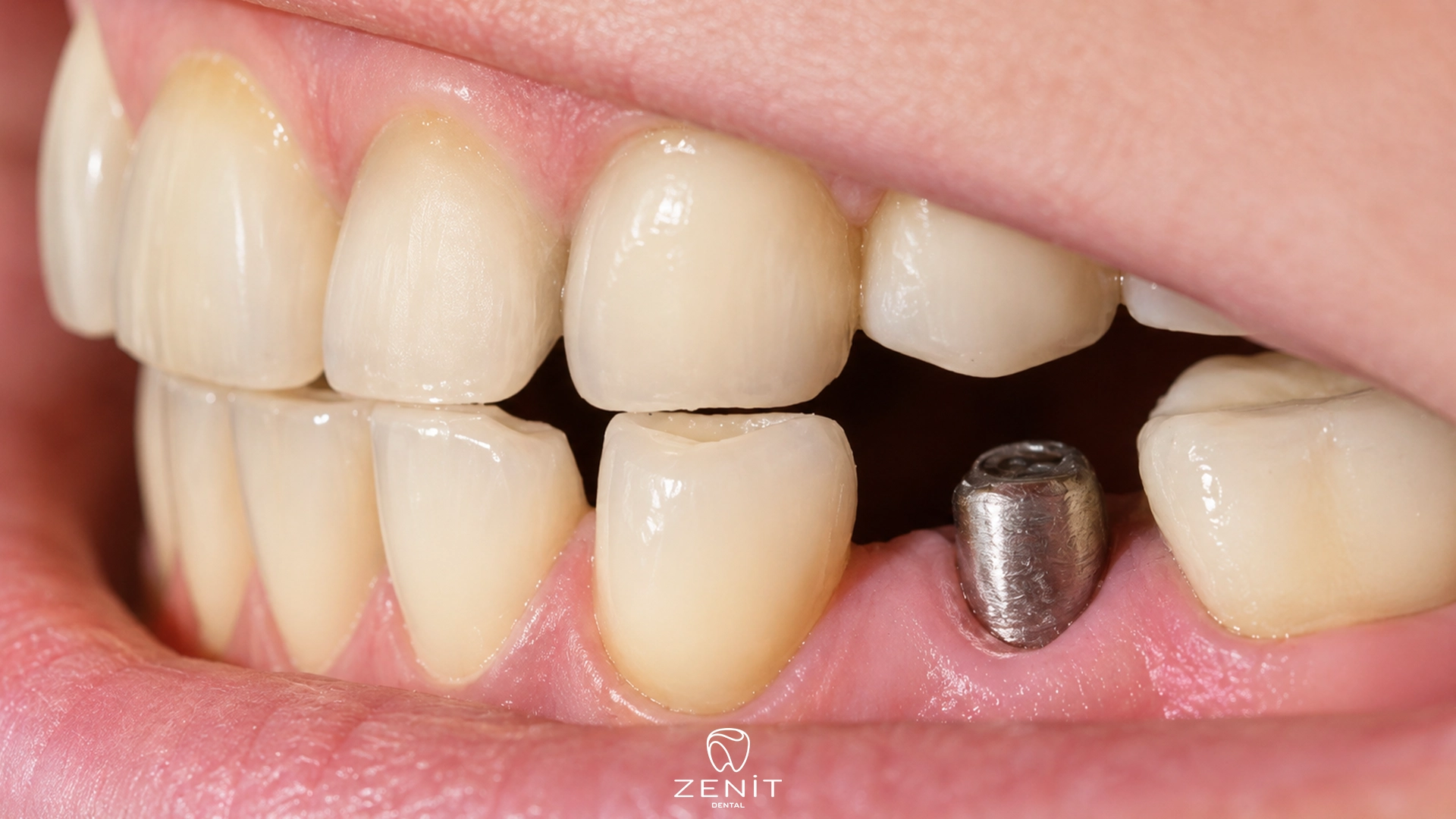
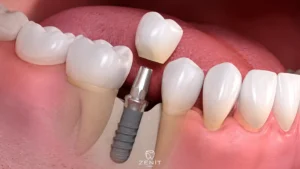
A dental implant system generally consists of three main components:
- Implant Body (Screw): The root-like component placed inside the jawbone.
- Abutment: The intermediate component that connects the implant screw to the dental crown.
- Superstructure (Prosthesis/Crown): The visible artificial tooth, typically made of porcelain or zirconia.
The compatibility and quality of these three components directly influence the longevity of implant treatment.
How Long Do Dental Implants Last?
Clinical studies indicate that properly planned dental implants placed by experienced professionals have success rates of approximately 95% to 98%.
Many patients ask, “Do dental implants last a lifetime?”
As a general rule, a well-integrated and properly maintained dental implant may last 25–30 years or even a lifetime.
However, an important distinction should be made between the implant itself—the titanium screw that remains inside the jawbone—and the prosthetic crown placed on top of it.
| Component | Average Lifespan | Does It Need Replacement? |
|---|---|---|
| Titanium Implant Screw | 25 Years – Lifetime | Usually not, unless bone loss or infection occurs |
| Abutment | 15–25 Years | May require replacement due to wear, screw loosening, or fracture |
| Porcelain / Zirconia Crown | 10–15 Years | May require replacement due to wear, discoloration, or fracture |
Due to chewing forces, the abrasive effects of food, and natural wear over time, porcelain restorations may deteriorate within 10–15 years or require replacement for aesthetic reasons.
However, as long as the underlying titanium implant remains healthy and securely integrated with the jawbone, only the prosthetic crown needs to be replaced. The implant screw itself can remain in place.
Factors That Affect the Lifespan of Dental Implants
Every individual has a unique oral and bone structure, metabolic rate, and lifestyle. Therefore, the lifespan of a dental implant may vary from person to person.
The main factors that directly influence implant longevity include:
1. Oral Hygiene and Daily Care
Dental implants cannot decay because titanium and porcelain are inorganic materials. However, the gum and bone tissues surrounding the implant are living tissues and remain vulnerable to bacterial infections.
Inadequate brushing and failure to use dental floss or interdental brushes can cause bacterial plaque to accumulate around the implant.
This plaque buildup may lead to gum inflammation and, in advanced cases, bone loss around the implant, eventually causing the implant to become loose or fail.
2. Dentist’s Expertise and Surgical Planning
Implant surgery is an advanced dental procedure that requires millimeter-level precision.
The angle and depth at which the implant is placed, accurate evaluation of bone volume at the implant site, and surgical planning supported by 3D tomography all directly affect treatment success.
An implant placed at an incorrect angle may receive uneven chewing forces, potentially leading to mechanical fractures or bone loss over time.
3. Bone Density and Bone Quality
For an implant to remain stable, it must be surrounded by sufficient bone of adequate thickness and quality.
When there is insufficient bone, procedures such as bone grafting or sinus lifting may be necessary to strengthen the implant site.
The long-term stability of implants placed in inadequate bone may be compromised.
4. Smoking and Tobacco Use
Smoking is one of the greatest threats to successful implant treatment.
Toxic substances in cigarette smoke reduce blood circulation in oral tissues, interfere with tissue healing, and may negatively affect the osseointegration process.
Heavy smokers may experience implant failure and early implant loss more frequently than non-smokers.
5. Systemic Health Conditions and Chronic Diseases
Uncontrolled diabetes, osteoporosis, autoimmune diseases such as rheumatoid arthritis, and certain cancer treatments may slow tissue healing.
The risk of infection can be particularly high in patients with uncontrolled diabetes.
However, patients whose blood sugar levels are well managed and who remain under regular medical supervision may still use dental implants successfully for many years.
6. Bruxism (Teeth Clenching and Grinding)
Nighttime teeth clenching and grinding can place excessive mechanical stress on the chewing system.
These excessive forces may cause the implant screw to loosen, the prosthetic restoration to fracture, or bone around the implant to deteriorate.
Patients diagnosed with bruxism may benefit from protective treatments such as a night guard (occlusal splint) or other supportive therapies recommended by their dentist.
Peri-Implantitis: One of the Biggest Threats to Dental Implants
Periodontitis is a condition involving inflammation and bone loss around natural teeth. When a similar condition develops in the tissues surrounding a dental implant, it is known as peri-implantitis.
- Peri-Implant Mucositis: This is the early stage in which inflammation is limited to the soft tissue surrounding the implant. Symptoms may include redness, swelling, and bleeding during brushing. When detected early, it may often be reversed with professional cleaning and appropriate antibacterial care.
- Peri-Implantitis: This occurs when untreated inflammation progresses from the soft tissues to the supporting bone. The jawbone surrounding the implant gradually begins to deteriorate. Symptoms may include discharge around the implant, discomfort or pain, gum recession, and eventually implant mobility. If the condition becomes severe and cannot be successfully treated, implant removal may become necessary.
When Should a Dental Implant Be Replaced?
Many patients wonder whether their dental implant will eventually have to be replaced.
If there are no biological or mechanical complications, there is generally no need to replace an implant screw simply because it has reached a predetermined “expiration date.”
However, certain complications or treatment failures may require implant replacement or revision surgery.
The main situations that may require implant replacement include:
1. Loss of Osseointegration and Implant Mobility
A successful dental implant should remain completely stable and should not move.
If movement is felt while chewing, there may generally be two possible explanations:
- The screw securing the prosthetic crown may have loosened. This can often be resolved by tightening or replacing the component.
- The connection between the implant and the bone may have been lost, causing the titanium implant itself to become mobile.
If the titanium implant itself moves within the bone, the implant may be considered unsuccessful.
The loose implant may need to be removed, the area cleaned to eliminate infection, bone grafting performed when necessary, and a new implant placed after the healing process has been completed.
2. Severe Bone Loss (Advanced Peri-Implantitis)
When significant bone loss develops around an implant, the remaining bone may no longer be sufficient to withstand chewing forces.
Deep bone defects around the implant may also become areas where bacteria accumulate and may negatively affect surrounding teeth and jawbone.
Depending on the dentist’s clinical assessment, the implant may need to be removed, bone regeneration procedures performed, and a new implant placed once the area has healed sufficiently.
3. Fracture of the Titanium Implant or Abutment
Although uncommon, the titanium implant screw or abutment may fracture due to excessive chewing forces, trauma such as accidents or impacts, or long-term material fatigue.
The fractured component is removed using specialized surgical instruments and, after adequate healing, a new implant may be placed.
4. Incorrect Positioning and Aesthetic Complications
Aesthetic or functional revision may be necessary when an implant has been placed at an anatomically incorrect angle, is positioned too close to important anatomical structures such as nerve canals, or causes aesthetic problems such as visible metal due to gum recession in the front teeth.
In such cases, the incorrectly positioned implant may be removed and a new implant planned in a more appropriate position.
5. Wear or Fracture of the Crown/Prosthesis
This situation usually involves replacement of the prosthetic restoration rather than the implant screw itself.
Porcelain cracking, wear, discoloration, or changes in the anatomy of neighboring teeth may make it necessary to replace the prosthetic crown after many years of use.
In most cases, the implant screw remains securely positioned in the jawbone while only the upper restoration is removed and replaced.
Stages of Dental Implant Replacement
The replacement process for a failed implant or an implant that needs to be removed generally consists of the following stages:
- Explantation: The damaged or non-integrated implant is removed using specialized reverse-torque systems or minimally traumatic surgical techniques designed to preserve as much surrounding bone as possible.
- Curettage and Bone Grafting: Granulation and inflammatory tissues inside the implant site are carefully removed. High-quality bone graft material may then be placed in areas where bone loss has occurred and covered with a protective barrier membrane when necessary.
- Healing Period: An average healing period of approximately 3 to 6 months may be required for the bone to mature and regain sufficient strength to support a new implant.
- Reimplantation: Once sufficient bone volume and quality have been achieved, a new implant is placed into the jawbone at the appropriate angle, position, and diameter.
7 Golden Rules for Extending the Lifespan of Dental Implants
If you want your dental implants to remain healthy and functional for as long as possible, you should carefully follow appropriate maintenance and protection measures after treatment:
- Brush Properly at Least Twice a Day: Brush your teeth for at least two minutes using a soft or medium-bristled toothbrush and an appropriate brushing technique.
- Do Not Neglect Interdental Brushes and Dental Floss: Plaque may accumulate around implant restorations, particularly near the gum line. Interdental brushes and specially designed floss for bridges and implants can help clean these difficult-to-reach areas.
- Consider Using a Water Flosser: Water flossers use pressurized water to help remove small food particles and bacteria from areas around implants and along the gum line.
- Visit Your Dentist Regularly: Early bone loss or inflammation around an implant may develop without noticeable pain or visible symptoms. Regular dental examinations and professional cleaning allow potential problems to be identified at an early stage.
- Quit Smoking or Reduce Tobacco Use Significantly: Avoiding tobacco helps support healthy blood circulation in oral tissues and reduces factors associated with poor healing and infection.
- Do Not Use Your Teeth to Break Hard Objects: Avoid using implant-supported teeth to crack hard foods such as nuts or ice or to open objects such as bottle caps.
- Seek Treatment If You Grind or Clench Your Teeth: If you regularly wake up with jaw discomfort or suspect that you grind your teeth at night, consult your dentist. A protective night guard may be recommended.
Comparison Between Natural Teeth and Dental Implants
Dental implants are among the most advanced artificial alternatives available in dentistry. However, they have certain biological and structural differences compared with natural teeth:
| Feature | Natural Tooth | Dental Implant |
|---|---|---|
| Type of Connection | Periodontal ligament with flexible fibers | Direct integration with bone (rigid/ankylosed connection) |
| Sensory Feedback | Detects chewing pressure through proprioception | Pressure sensation is generally lower than with a natural tooth |
| Risk of Tooth Decay | Can develop dental caries | Does not decay because the material is inorganic |
| Risk of Gum/Tissue Infection | Periodontitis may develop | Peri-implantitis may develop |
| Blood Supply | Receives extensive vascular support from surrounding tissues | Blood supply comes primarily from surrounding bone and gum tissue |
Natural teeth are surrounded by flexible periodontal ligament fibers that act like shock absorbers. These fibers do not exist around dental implants.
Because an implant is directly integrated with the bone, chewing forces are transmitted more directly to the jawbone. For this reason, the bite and occlusal balance of implant-supported restorations must be carefully adjusted by the dentist.
Frequently Asked Questions About Dental Implant Treatment
Is Getting a Dental Implant Painful?
The procedure is generally performed under local anesthesia, which is used to control pain during surgery.
After the procedure, some patients may experience mild discomfort, tenderness, or swelling. Your dentist may recommend appropriate medications and post-operative care depending on your individual needs.
Can the Body Reject a Dental Implant?
What is commonly referred to as the “body rejecting the implant” is not the same type of immune rejection seen in organ transplantation.
Titanium is widely used because of its high level of biocompatibility. Implant failure is more commonly associated with factors such as infection, smoking, inadequate bone support, excessive mechanical forces, or failure of osseointegration rather than classic tissue rejection.
Do Dental Implants Have a Shorter Lifespan in Older Adults?
Not necessarily.
As long as an individual’s overall health is suitable for implant treatment and there is sufficient jawbone volume and quality, dental implants may also achieve successful long-term outcomes in older adults.
Age alone is generally not considered the primary factor determining how long a dental implant will last.