


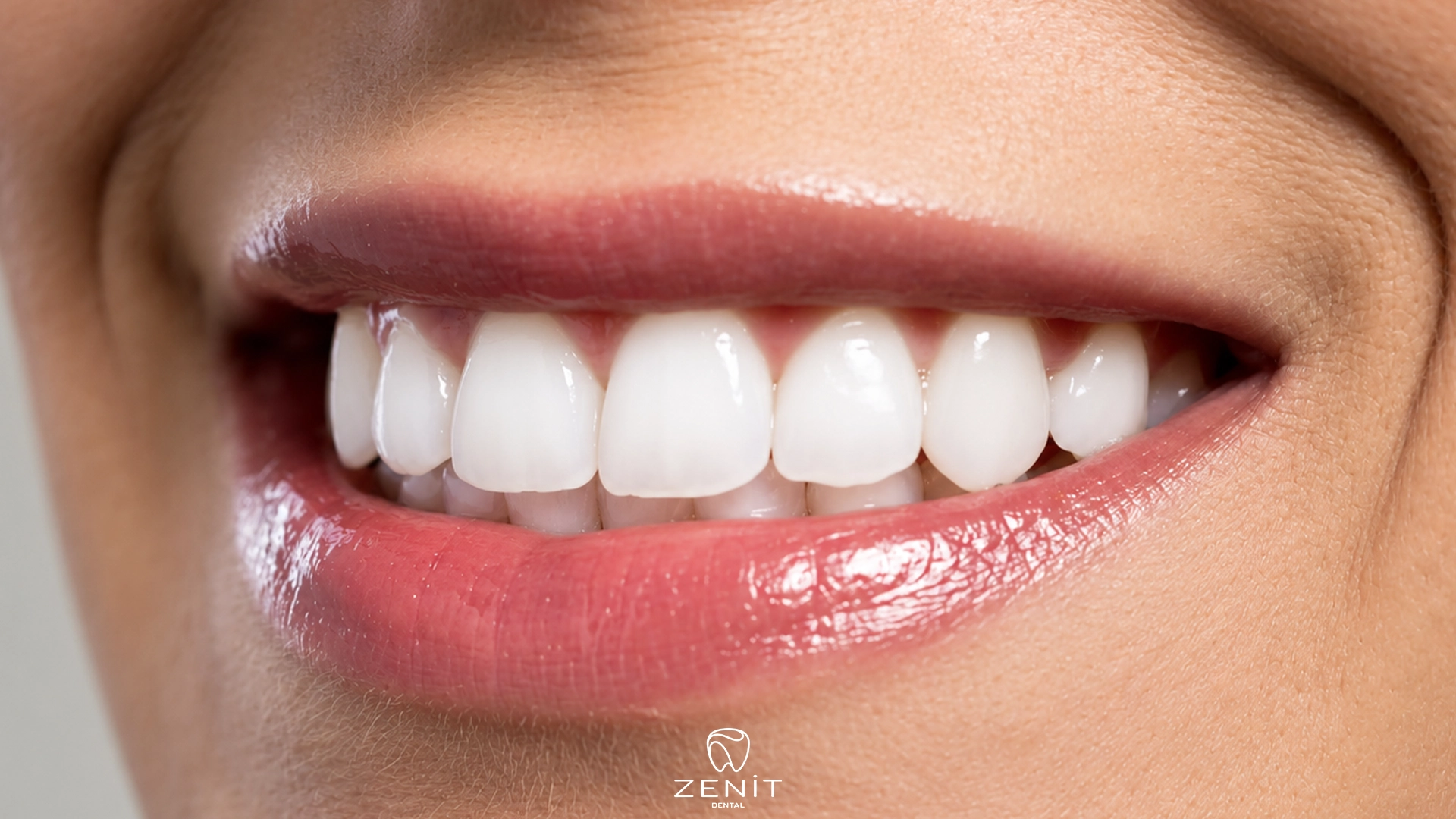
How Long Do Zirconia Crowns Last? Factors Affecting the Lifespan of Zirconia Teeth
Standing out in aesthetic dentistry for both superior durability and seamless compatibility with natural tooth structure, zirconia crowns have become an indispensable part of smile design and prosthetic treatments. By eliminating the grayish reflections caused by traditional porcelain-fused-to-metal crowns and offering a gum-friendly alternative through high biocompatibility, this treatment promises patients long-term comfort. However, a common question arises for anyone considering this procedure: How long do zirconia crowns last?
Prepared with the clinical expertise of Zenit Dental, this comprehensive guide explores the average lifespan of zirconia restorations, the material’s mechanical strength, the key factors directly influencing its longevity, and practical tips for keeping your crowns looking pristine for decades.
What Is a Zirconia Crown and Why Is It Preferred?
A zirconia crown is a prosthetic restoration manufactured from zirconia (zirconium dioxide, ZrO2) ceramic, either as a high-strength coping or as a monolithic block. While conventional metal-backed porcelain crowns offer virtually zero translucency—often leaving teeth looking opaque and artificial—zirconia refracts and reflects light just like natural dental enamel.
Key clinical advantages routinely emphasized by Zenit Dental specialists include:
-
High Biocompatibility: Integrates seamlessly with surrounding gum tissue, eliminating the risk of allergic reactions.
-
Exceptional Mechanical Strength: Exhibits fracture resistance between 900 and 1200 MPa, easily enduring the heavy masticatory forces of posterior molars.
-
Natural Aesthetics: High translucency avoids an artificial chalky look and prevents dark gray margins at the gum line.
-
Low Thermal Conductivity: Prevents temperature transfer from hot and cold foods to the dental pulp, significantly reducing postoperative sensitivity.
How Long Do Zirconia Crowns Last? Average Lifespan
While pinpointing an exact expiration date for any dental restoration is impossible, scientific clinical trials and long-term follow-ups provide clear benchmarks. So, under standard conditions, how long do zirconia crowns last?
Long-term dental literature indicates that a properly placed and well-maintained zirconia crown delivers an average service life of 10 to 15 years. For patients who maintain meticulous oral hygiene, attend regular dental checkups, and manage parafunctional habits like bruxism, this lifespan can easily extend to 20 years or more.
The table below outlines how zirconia compares to alternative restorative materials in terms of longevity and key performance metrics:
| Crown Type | Average Lifespan | Biocompatibility / Gum Compatibility | Aesthetic Quality | Chewing Resistance |
| Zirconia Crown | 10 – 20+ Years | Very High (Tissue friendly) | Very High (Natural enamel-like) | 900 – 1200 MPa (Very High) |
| Porcelain-Fused-to-Metal (PFM) | 7 – 10 Years | Moderate (Risk of dark lines/allergies) | Moderate / Opaque | 700 – 800 MPa (High) |
| All-Ceramic (E-Max / Empress) | 8 – 12 Years | High | Superior (Ideal for anterior teeth) | 350 – 500 MPa (Moderate) |
| Composite Veneer / Bonding | 3 – 7 Years | Good | Fair (Prone to staining) | Low / Moderate |
The material itself is only part of the equation; intraoral biological balance and daily lifestyle habits play an equally decisive role.
Key Factors Affecting the Lifespan of Zirconia Teeth
While zirconia blocks are virtually unbreakable in laboratory stress tests, the human mouth is a dynamic biological ecosystem. The ultimate durability of a crown depends on several core variables:
1. Oral Hygiene and Daily Maintenance
Zirconia is an inorganic ceramic and cannot decay. However, the natural tooth supporting it underneath, as well as the surrounding periodontal tissue, remains fully biological. Inadequate brushing and flossing lead to:
-
Plaque accumulation along the crown margin, triggering gingivitis or periodontal bone loss.
-
Gum recession that exposes the crown margin, leaving vulnerable root surfaces open to secondary caries.
-
Food entrapment between teeth, which can quickly decay the underlying natural tooth structure.
2. Teeth Grinding and Clenching (Bruxism)
Clenching or grinding habits during sleep or under stress exert 4 to 5 times the normal bite force on teeth and jawbones (occasionally reaching pressures of 400–500 kg/cm²).
-
Even if monolithic zirconia resists fracture, excessive pressure can cause micro-chipping in layered porcelain veneers.
-
Extreme stress degrades the dental cement layer prematurely, resulting in microleakage.
-
At Zenit Dental, patients diagnosed with bruxism are routinely prescribed custom nightguards (occlusal splints) or masseter botox therapy to safeguard their restorations.
3. Dietary Habits and Mechanical Trauma
Despite its hardness, zirconia possesses a lower elasticity modulus compared to natural dentin.
-
Cracking hard-shelled nuts (walnuts, hazelnuts, pistachios) directly with the teeth,
-
Habitual ice chewing, biting pens, cutting threads, or tearing packaging,
-
Accidentally biting hard fruit pits,
can create localized stress concentrations, leading to structural micro-fractures.
4. Clinical Expertise and Preparation Accuracy
A crown’s longevity begins in the dental chair during tooth preparation:
-
The natural tooth must be prepared with precise chamfer or shoulder margins respecting anatomical contours.
-
Inaccurate preparations lead to poor marginal fit, creating microscopic gaps between the tooth and crown.
-
Microleakage dissolves the bonding cement over time, allowing bacteria to infiltrate and rot the underlying tooth from within.
5. CAD/CAM Technology and Material Quality
The purity, manufacturing origin, and density of the zirconia disc determine structural reliability. Utilizing advanced CAD/CAM (Computer-Aided Design / Computer-Aided Manufacturing) milling ensures marginal adaptations measured down to the micrometer. Uncertified or substandard zirconia blanks suffer from fatigue and microfractures much earlier under repeated cyclic loading.
6. Luting and Cementation Protocols
Achieving a long-lasting bond requires strict moisture isolation when applying modern resin cements. Any contamination from saliva or blood during cementation cuts adhesive bond strength substantially. Properly isolated and bonded zirconia restorations can remain securely seated for decades.
7 Golden Rules to Maximize the Lifespan of Zirconia Crowns
Extending the life of your zirconia restorations well past the 15-to-20-year mark depends largely on daily home care:
-
Brush Twice Daily with Proper Technique: Use a soft or medium-bristle brush and non-abrasive toothpaste, brushing away from the gums toward the chewing surfaces.
-
Commit to Interdental Cleaning: Standard toothbrushes cannot reach interproximal crown interfaces. Use bridge dental floss, interdental brushes, or a water flosser daily.
-
Wear Your Nightguard Consistently: If you clench your jaw or wake up with facial tension, use your custom-fitted occlusal guard every night.
-
Never Use Teeth as Tools: Opening bottles, tearing plastic wrappers, or cracking shells will compromise your restoration.
-
Visit Zenit Dental Every Six Months: Biannual routine checkups and professional cleanings preserve gum margins, verify occlusion, and detect early cement degradation.
-
Watch for Gum Recession: If you notice bleeding, redness, or receding gum margins, schedule an examination immediately.
-
Moderate Tobacco Use: While smoking does not stain zirconia directly, it compromises periodontal blood flow and accelerates bone loss around the anchor tooth.
When Should a Zirconia Crown Be Replaced?
No prosthetic restoration permanently fuses into living bone tissue; natural oral biology inevitably shifts with age. Signs that indicate a zirconia crown needs evaluation or replacement include:
-
Severe Gum Recession: Visible dark gaps or exposed root surfaces along the gum line that compromise smile aesthetics.
-
Secondary Caries Underneath: Pain, sensitivity, or bad odor caused by bacterial ingress beneath an unstable crown margin.
-
Mechanical Fracture: Significant porcelain chipping or structural damage following severe facial trauma or persistent bruxism.
-
Occlusal Imbalance: Shifts in bite alignment caused by wear and tear on neighboring natural teeth over decades.
-
Persistent Foul Odor or Taste: A chronic bad taste near the restoration indicates washed-out cement and trapped bacterial biofilm.
The Zenit Dental Treatment Approach
Achieving multi-decade longevity for zirconia restorations requires precision from initial diagnostic scans to final occlusal polishing. Zenit Dental delivers:
-
Digital Smile Design: We evaluate your facial proportions, lip posture, and skin tone to preview your custom restorations in 3D before starting treatment.
-
High-Precision Intraoral Scanning: By replacing traditional putty impressions with digital scanners, we achieve micrometer-level marginal accuracy.
-
Certified Multi-Layer Zirconia: We use authentic, medical-grade multi-layer zirconia discs that deliver both extreme flexural strength and natural incisal translucency.
-
Tailored Maintenance Programs: Every case concludes with comprehensive occlusal calibration, bruxism risk evaluations, and structured follow-up recalls.
Frequently Asked Questions
Do zirconia crowns last a lifetime?
No dental restoration can be medically guaranteed for a lifetime because intraoral biology changes over time. However, with exceptional hygiene and proper clinical execution, zirconia crowns can comfortably function for 20 years or more.
Do zirconia crowns discolor or turn yellow?
No. Zirconia is a non-porous, highly polished ceramic. It does not absorb external pigments from coffee, tea, red wine, or tobacco, retaining its original shade indefinitely.
Can the tooth under a zirconia crown decay?
The zirconia shell cannot decay, but the underlying tooth remains vulnerable. If plaque gathers along the margin or the cement washes out, secondary cavities can form. Daily interdental cleaning is crucial to prevent this.
Can a zirconia crown come off?
When bonded using modern adhesive resin cements under strict isolation, detachment is rare. It typically occurs only after severe trauma or extensive decay in the underlying tooth.
Can a zirconia tooth break?
The zirconia substructure matches the strength of metal and is virtually impossible to fracture under normal chewing. Minor chipping can rarely occur on the overlying aesthetic porcelain layer in cases of heavy trauma or untreated teeth grinding, which can often be polished or repaired chairside.
When premium biomaterials, advanced clinical craftsmanship, and meticulous oral care unite, questions about how long do zirconia crowns last give way to a confident, lifelong smile. To plan your custom aesthetic restoration, contact Zenit Dental to schedule your personal consultation today.