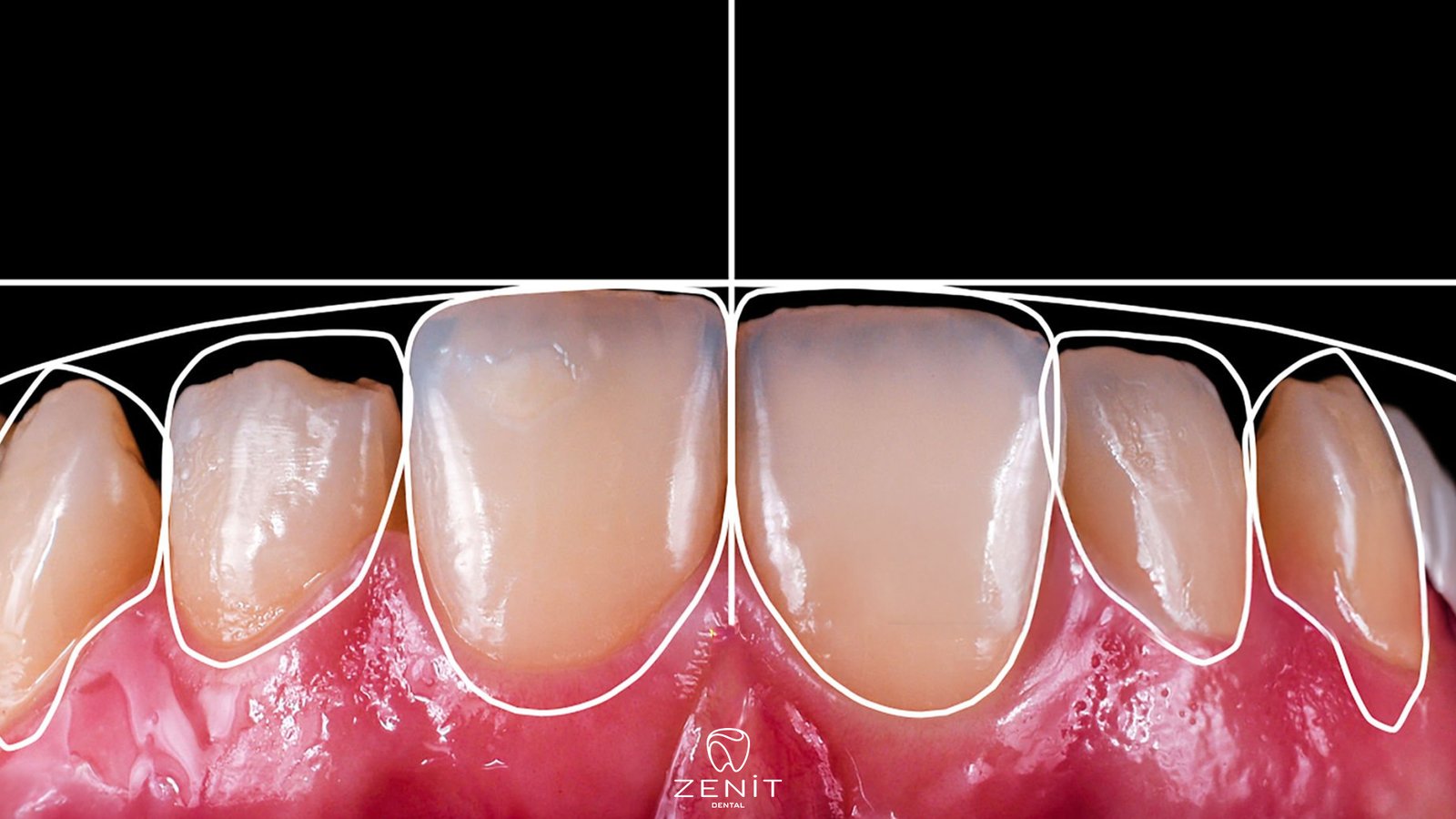
Dental problems that prevent a beautiful smile can negatively affect social life. In aesthetic dentistry, one of the first procedures that comes to mind is smile design—a multidisciplinary approach. Also known as smile aesthetics, this treatment corrects shape-related and certain visual imperfections, helping you achieve the dental appearance you have always imagined. The application is planned to be natural and suitable for the individual, and thanks to the combination of dentistry and artistry, a personalized smile can be designed.
Smile design is a holistic approach and a popular dental aesthetics practice in recent years. It is performed to create an aesthetically pleasing smile and is also referred to as a “Hollywood smile” or “smile aesthetics.” In this application, the patient’s needs are first determined according to their dental and oral structure. Then, the planned procedures are shaped accordingly. In this way, the treatments required to achieve the targeted smile form are planned—often including implants, veneers/crowns, or other dental procedures.
In smile aesthetics, many factors are evaluated, from lip tone and skin tone to facial features and nose structure. Existing oral and dental problems are identified and a treatment plan is created to address them. For example, implants may be applied to complete missing teeth. If necessary, gum aesthetics such as gingivectomy can also be performed. With implants and dental veneer/crown methods, teeth can gain a brighter appearance. In some cases, orthodontic treatments may also be needed.
Disproportionate tooth form can undermine a beautiful smile. A person may have such disproportion due to genetics or after trauma. With aesthetic dentistry applications, it is possible to overcome these unfavorable conditions today. Smile aesthetics offers several benefits, and one of the most important is the opportunity to see how the smile may look even before the procedure is performed.
In addition, the patient can achieve the smile they want with full approval and planning. During the initial assessments, dental diseases that the patient may not have noticed can be detected, enabling early diagnosis and treatment to protect oral health. Another advantage is that it can be applied to many people.
Before a personalized smile design, certain points need to be determined, because both parties must agree on the procedures. First, the teeth are examined to identify issues in the teeth and gums. If there are cavities, they are treated and the mouth is prepared for the smile aesthetics process. Then the smile is planned in line with the previously agreed approach.
Prior to treatment, videos and photos of the patient are taken. In the same appointment, measurements of the upper and lower jaw are also obtained. These images are transferred to a digital environment, where simulations are prepared to show how the desired smile may look. At the second appointment, silicone molds—known as a “mock-up”—may be placed on the patient’s teeth using the images and measurements. These trials are recorded to achieve the best possible smile design.
Throughout the process, the patient is informed about the necessary procedures. If alternative options exist, they are also explained. Ultimately, treatment proceeds with a mutual decision. All steps are documented and transferred to digital records. Generally, the desired smile is achieved in about 3 sessions, though it may take longer depending on the scope of the procedures and the outcome.
There are key rules that make a smile design successful. This treatment focuses on patient satisfaction and aims to eliminate all dental problems that disrupt aesthetics. While it resolves basic dental issues, its main goal is to address aesthetic concerns. Suitability to the person’s facial shape provides a natural look and is among the first criteria that must be met.
Other criteria are also important: tooth alignment should be appropriate for the person’s age, facial features, lip structure, gender, and overall appearance. For example, tooth wear and gum recession can occur with age, and the clinician must plan an appropriate treatment accordingly. Tooth structures also differ by gender; the practitioner should choose the most suitable technique to achieve an attractive smile.
With this dental treatment technique, the smile the person wants and the smile achieved can closely match. Generally, there is no significant deviation in planning, so patients are satisfied. Once completed, it typically does not need to be repeated immediately. People who choose smile aesthetics often wonder whether the outcome is permanent.
The smile achieved through a combination of several dental treatments is generally long-lasting. However, patients should pay close attention to their oral and dental hygiene after treatment. In most cases, having this treatment once is sufficient. Therefore, there is usually no concern about whether the smile form will deteriorate; additional frequent visits are not necessary unless advised by the dentist.