


What Is Apical Resection? How Is It Performed?
Toothache often begins as an innocent ache. At first, it is brushed off as “just a bit of sensitivity,” but over time it can become part of daily life. It may worsen with hot or cold, wake you up at night, or force you to rely constantly on painkillers. At this stage, most people assume the problem is a simple cavity. However, in some cases, the real issue is not in the visible part of the tooth, but much deeper silently progressing at the root tip.
Persistent pain in a tooth that has already undergone root canal treatment, recurring swelling, or repeated infections can be confusing. “I had a root canal why does it still hurt?” is a common question. In situations like these, your dentist may mention a treatment you may not have heard of before: apical resection.
At first glance, the name may sound technical or even intimidating. The fact that it is a surgical procedure can also increase anxiety. However, apical resection is often a very valuable treatment aimed at saving the tooth rather than extracting it. In other words, it is not a last resort; it is an important step that gives the tooth one more chance before extraction.
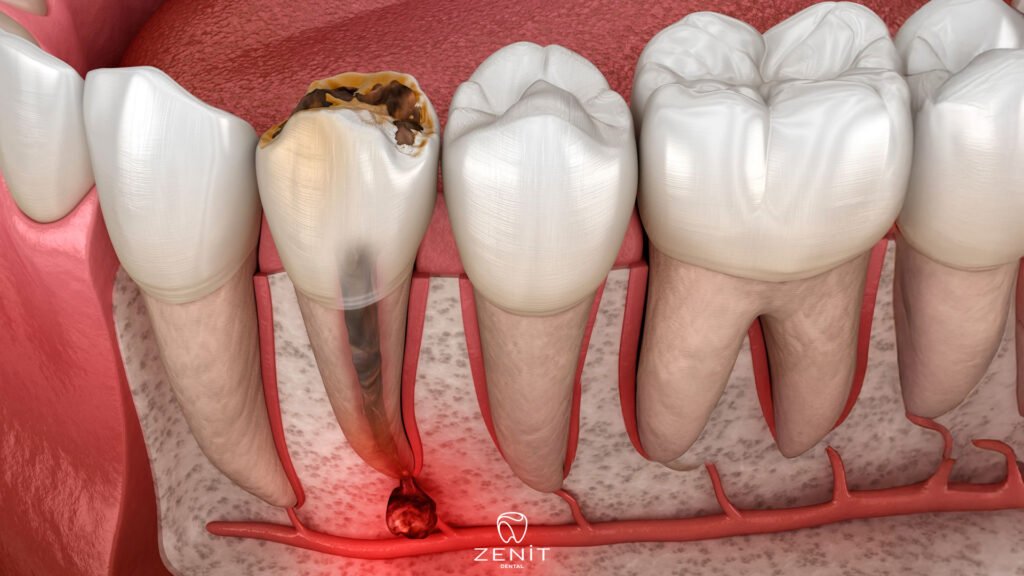
Sometimes, no matter how carefully a root canal treatment is performed, the infection at the root tip cannot be completely eliminated. Especially in teeth with complex root structures, bacteria hidden in very fine canals can cause problems again over time. In such cases, even if the upper part of the tooth looks healthy, the issue at the root tip may persist.
What Is Apical Resection?
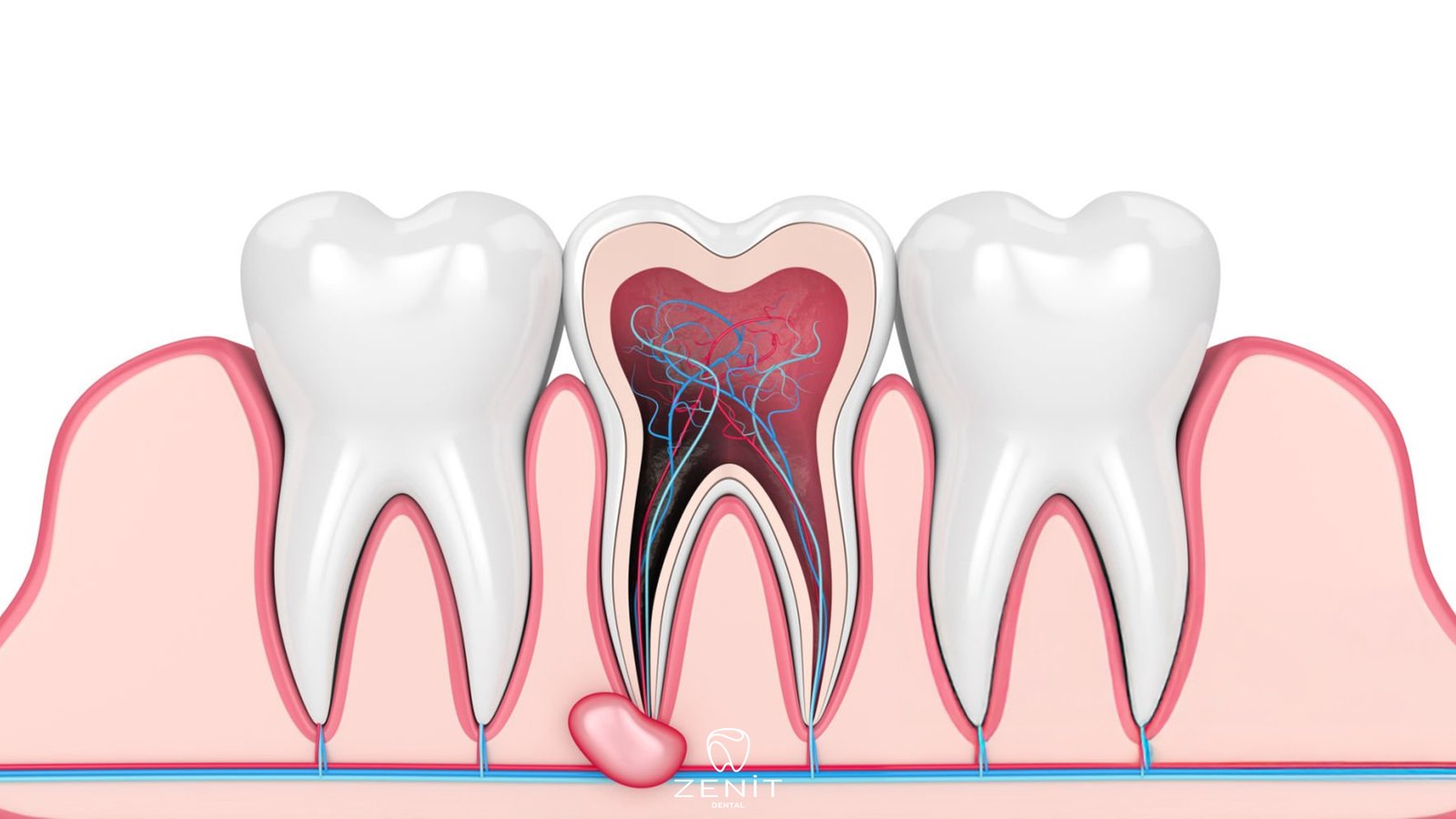
Apical resection, in its simplest terms, is a small yet effective surgical procedure aimed at saving a tooth without extracting it. The tooth root ends at a point within the jawbone, known as the “apex.” In some cases, infection or inflammation develops at this root tip, and unfortunately, conventional root canal treatment alone may not be sufficient to resolve it completely.
During this procedure, the entire tooth is not treated only the problematic area at the root tip is addressed. Through a small surgical incision in the gum, the root tip is accessed, and the infected tissue along with the problematic portion of the root is carefully removed. The upper structure and functional part of the tooth remain in the mouth. The goal is not to sacrifice the tooth, but to give it a second chance.
It would be incorrect to think of apical resection as a “last resort.” In many cases, it is one of the most logical and conservative options before considering extraction. Preserving a natural tooth is always more valuable than alternatives such as implants or dentures. With this procedure, the source of pain, swelling, and recurrent infections is eliminated while the tooth’s chewing function is preserved.
In Which Cases Is Apical Resection Performed?
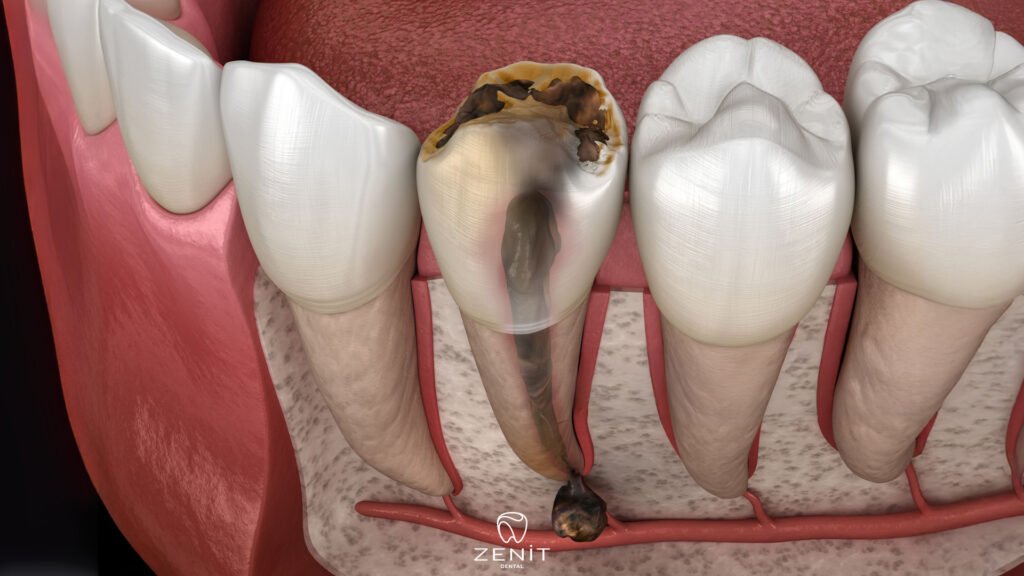
Root canal treatment is often successful; however, in some special cases, it may not be sufficient on its own. If pain persists despite a completed root canal, there is a high likelihood of an infection at the root tip that has not healed. In such situations, apical resection allows direct access to the source of the problem.
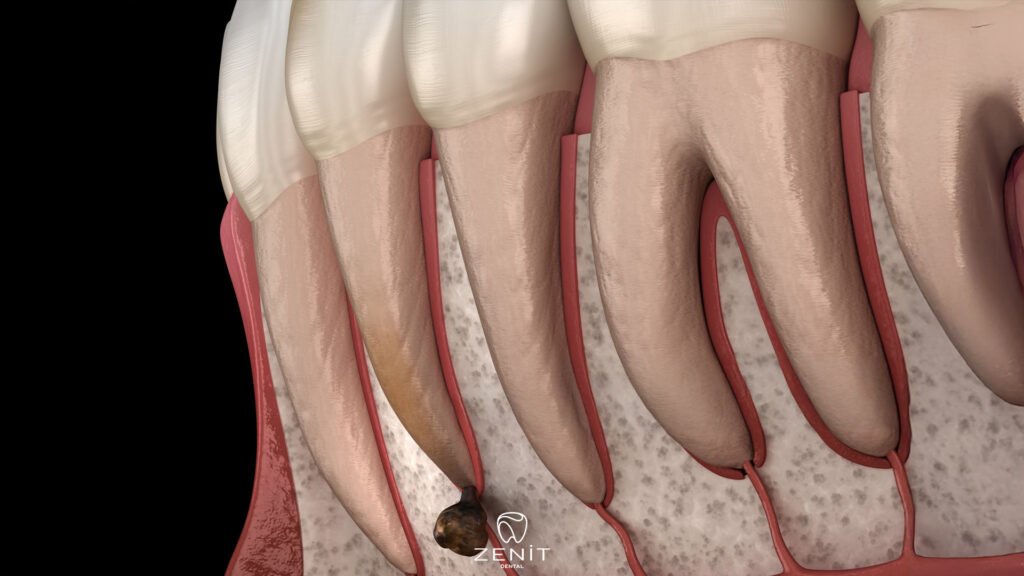
If there is a cyst or a long-standing chronic infection at the tip of the tooth root, these tissues can eventually damage the surrounding bone. When root canal treatment cannot fully clean this area, surgical removal of the root tip may be necessary, allowing the tooth to remain in the mouth without extraction.
In some teeth, repeating root canal treatment is not technically possible. If materials such as fillings, posts, or similar structures inside the canal cannot be safely removed, apical resection becomes an effective alternative. Likewise, if there is a crack or small fracture at the root tip, removing the problematic portion can help preserve the healthy part of the tooth.
Long-standing abscesses, recurrent swelling, and gum infections can also indicate that this procedure may be necessary.
How Is Apical Resection Performed?
Apical resection is a controlled procedure performed within the scope of oral and maxillofacial surgery and is usually carried out under local anesthesia. This means no pain is felt during the procedure; the patient may only notice slight pressure. Before starting, the area is completely numbed, and the surgeon makes a small incision in the gum to reach the root tip. The infected portion of the root tip is then carefully removed by a few millimeters, and the surrounding inflamed tissues are thoroughly cleaned.
After the cleaning is completed, the end of the canal is sealed with a special filling material. This step is crucial to prevent the infection from recurring. Finally, the gum tissue is repositioned and closed with small stitches. Apical resection usually takes between 30 and 60 minutes. Depending on the complexity of the case and the structure of the tooth, this time may be slightly longer; however, for most patients, it is not as difficult or frightening as it may seem.
Is Apical Resection a Painful Procedure?
When apical resection is mentioned, the first question that usually comes to patients’ minds is, “Will I feel pain?” This concern is completely normal. However, it should be stated clearly that no pain is felt during the procedure. Thanks to local anesthesia, the treatment area is fully numbed, and the patient may only feel slight pressure throughout the procedure.
After the procedure, mild pain, soreness, or swelling may occur for a few days. This is a natural response of the body to the surgical intervention and typically subsides quickly. With the pain relievers recommended by your dentist, this process can be easily managed.
Recovery After Apical Resection
The recovery process after apical resection is usually faster and smoother than expected for most patients. Since everyone’s body responds differently, the duration may vary; however, most people can comfortably return to daily life within 1–2 weeks. Mild pain, swelling, or occasionally bruising may be seen in the first few days. These are completely normal and gradually resolve on their own.
During this period, it is important to pay attention to certain points to ensure healthy healing. Especially during the first 24 hours, hot foods and drinks should be avoided, and hard foods should not be chewed on the treated side. Oral hygiene should be maintained carefully without putting strain on the stitches. Taking the medications prescribed by your dentist regularly will also make the recovery process much more comfortable. The stitches are usually removed within 7–10 days, after which recovery feels significantly faster.
Is Apical Resection Suitable for Everyone?
Apical resection may not be suitable for every patient or every tooth. The structure of the tooth root, the condition of the surrounding bone tissue, the extent of the infection, and the patient’s overall health must all be evaluated together. In some cases, extracting the tooth may be a healthier and more appropriate long-term option.
Comments are closed