


What is Overbite? How is it Treated?
Smiling is, in fact, the most genuine and natural way a person expresses themselves. Sometimes a single smile can convey what a glance can’t. Unfortunately, however, not everyone is satisfied with their own smile. Sometimes the shape of the teeth, the structure of the jaw, or the way they fit together can create both aesthetic concerns and lead to various health problems in daily life. This is where we often encounter a condition: Overbite.
Overbite, the excessive overlapping of the upper teeth over the lower teeth, is a common problem that many people experience without even realizing it. At first glance, it may seem merely an aesthetic issue; it creates a minor difference in a person’s smile and is often mistaken for “merely a cosmetic issue.” However, the truth is much more than that. Overbites can directly affect not only our smile but also numerous other aspects, from the jaw joint to dental health, and even our speech.
Let’s think for a moment: Is the proper alignment of teeth when smiling important only for looking good in photos? Of course not. Our chewing function, speech, and even the way our teeth wear over time are all affected by this bite. Therefore, an overbite is a condition that shouldn’t be ignored.
What is an Overbite?
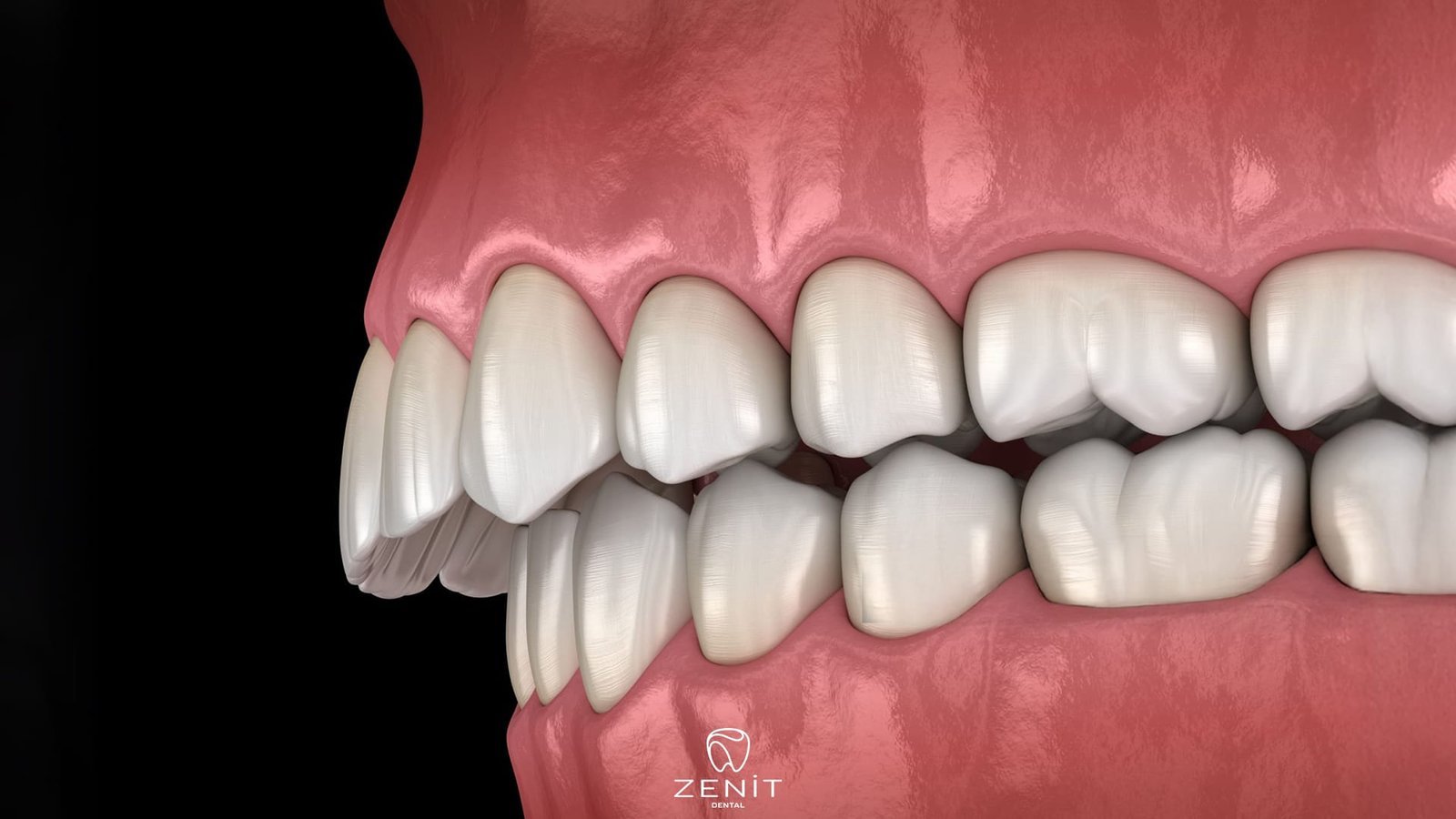
An overbite, in its simplest form, is the condition where the upper front teeth overlap the lower front teeth more than normal; in other words, the upper teeth overlap the lower teeth excessively during the bite. We all have some degree of overbite in our dentition, and this is natural. It’s not expected for the upper teeth to meet the lower teeth with a perfect bite; on the contrary, a certain degree of overbite is necessary for healthy teeth function.
The extent of this overbite is crucial. Generally, a bite between 5% and 25% is considered normal. In other words, a slight overlap between the upper teeth and the lower teeth is quite healthy for both aesthetic and functional reasons. However, when this amount is exceeded, a problem called a “deep bite” occurs.
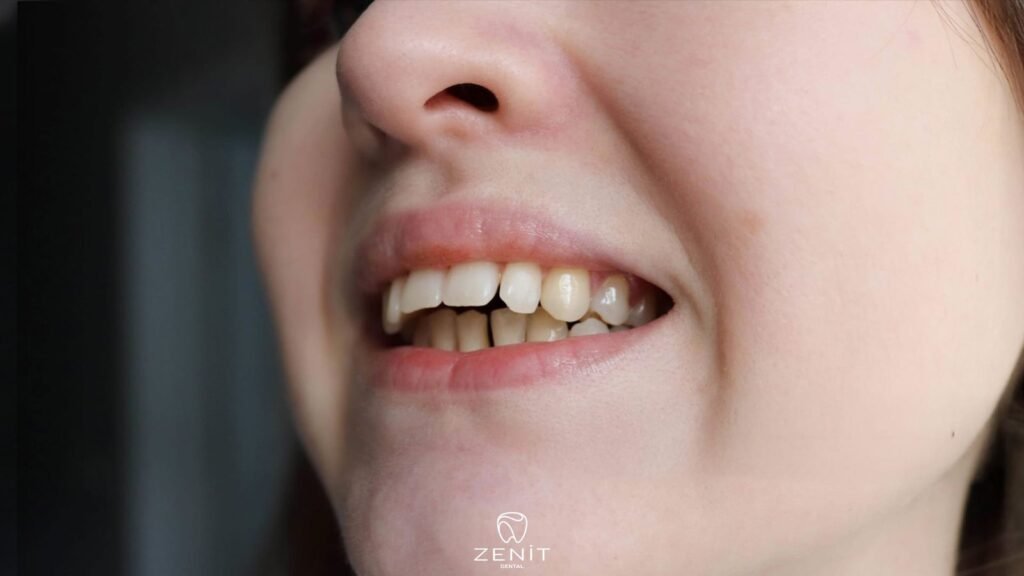
A deep bite not only affects the aesthetics of a smile; over time, it can lead to various problems, including tooth wear, jaw joint strain, and even speech disorders. In some individuals, the lower teeth touch the upper palate, which can lead to gum damage and sensitivity inside the mouth. Furthermore, the near-invisibility of the lower teeth can distort a person’s smile and create an aesthetically unsightly appearance.
What Causes an Overbite?
There’s actually no single cause for an overbite. Sometimes it stems entirely from genetic factors, while other times, habits acquired in childhood can predispose to the condition. In other words, both congenital and later-developing factors can combine to cause an overbite. Here are the most common causes:
Genetic Factors
Jaw structure, tooth alignment, and even tooth size are largely related to our genetics. If a family history of narrow jaws, overlapping teeth, or bite problems runs in families, it’s quite common for these conditions to be passed down to subsequent generations. In other words, sometimes an overbite can be entirely congenital.
Thumb Sucking Habit
One of the most seemingly innocent habits in childhood can actually seriously affect dental health. Prolonged thumb sucking can push the front teeth forward, particularly the front teeth, and deteriorate the jaw structure. This can trigger an overbite later in life.
Pacifier and Bottle Use
Pacifiers and bottle use don’t actually pose a problem until a certain age. However, if this habit continues after the age of 3-4, it can disrupt the natural alignment of the teeth. This can lead to misalignments, especially in the front teeth, and irregularities in jaw closure, increasing the risk of an overbite.
Thrusting Tongue Habit
Some people constantly thrust their tongue forward while swallowing without even realizing it. This is called “thrusting tongue,” and over time, it causes the front teeth to protrude. Pushing the teeth forward disrupts the bite, paving the way for an overbite.
Tooth Loss
When a tooth is missing, the other teeth begin to move to fill the gap. This can disrupt jaw balance and, over time, cause bite problems. Untreated tooth loss, in particular, can lead to the development of an overbite without being noticed.
What are the Symptoms of an Overbite?
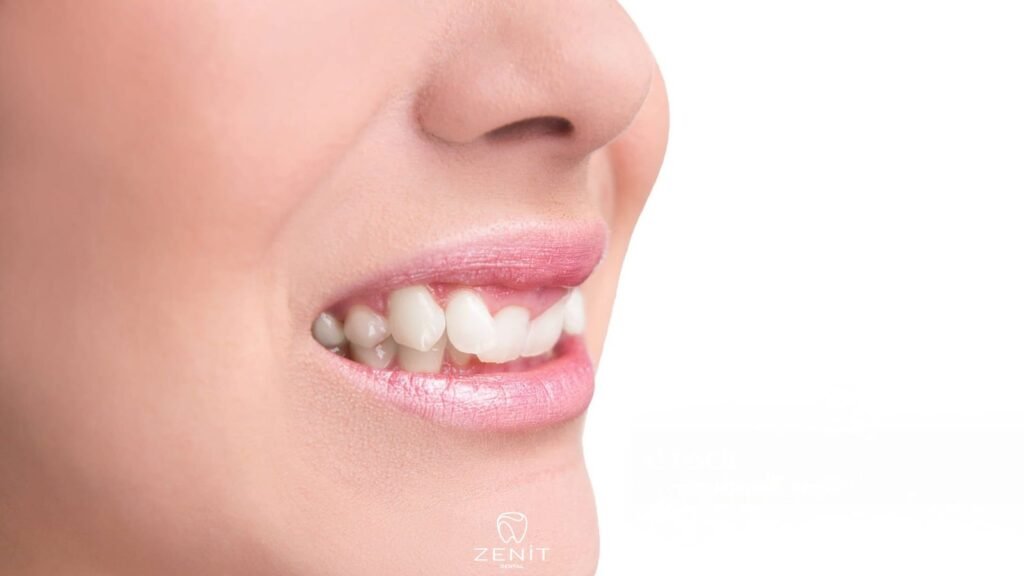
An overbite can often be noticed simply by looking in the mirror. It’s particularly noticeable when the upper teeth cover the lower teeth too much when smiling. However, this condition isn’t limited to appearance; it can manifest itself in many symptoms that affect daily life. Here are some signs to watch out for:
Upper teeth covering the lower teeth too much: An overbite that’s too large disrupts the aesthetics of the smile and reduces the visibility of the lower teeth.
The lower teeth are barely visible: If the lower teeth disappear completely when smiling, this is one of the most obvious signs of a deep bite.
Jaw pain and joint problems: When the jaw’s natural position is disrupted, the joint becomes strained. This can cause pain and even occasional noises in the jaw joint area.
Difficulty chewing and speaking: If the teeth do not meet properly, it can be difficult to chew food comfortably. Some words can even be difficult to pronounce.
Incomplete lip closure: An improper bite can prevent the lips from coming together properly, creating both aesthetic and functional problems.
Teeth wear and fracture: Over time, improper bite causes the teeth to exert undue pressure on each other. This can lead to enamel wear, sensitivity, and even small fractures.
How to Treat Overbite
The method used to treat overbite varies depending on the severity of the problem, the individual’s age, and their overall oral health. An orthodontist determines the most appropriate plan after a thorough examination. One of the most common methods is orthodontic treatment, which corrects the bite of the teeth with braces or clear aligners. Treatment is particularly effective in childhood and adolescence, and is also quite successful in adults, although the process may take a bit longer.
In cases detected in childhood, fixed or removable appliances can help guide jaw development, preventing the need for more extensive treatments later. If the teeth are severely crowded, some teeth may need to be extracted to accommodate the jaw structure, and this is usually combined with orthodontic treatment.
In severe cases of overbite, orthodontics alone may not be sufficient; in this case, orthognathic surgery, which involves surgically correcting the jaw structure, is the treatment of choice.
How Long Does Treatment Take?
The duration of overbite treatment varies from person to person, as each individual’s teeth, jaw development, and the severity of the problem are unique. In mild cases, results are generally seen within 6-12 months, while in moderate and severe cases, this period can extend up to 18-24 months. If surgical intervention is necessary, the process may be more extensive and longer.
The most important thing here is to continue treatment regularly and follow your doctor’s recommendations. Patiently pursued treatment not only results in an aesthetically pleasing smile but also improves quality of life in many aspects, from chewing function to jaw health.
Comments are closed