


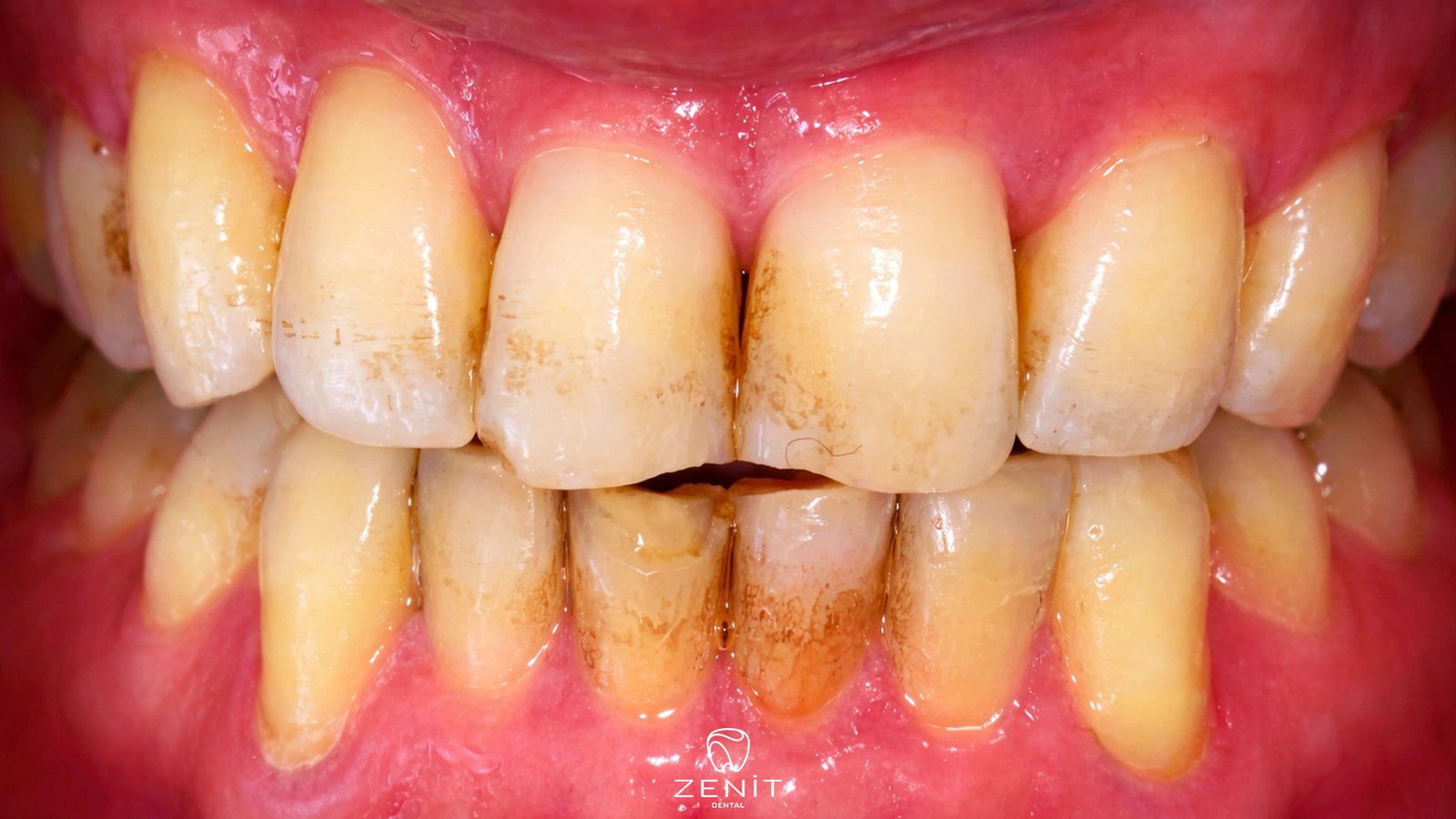
How to Get Rid of Tooth Stains?
In the hustle and bustle of daily life, we’ve all, at some point, looked in the mirror and noticed unwanted stains on our teeth. Our morning coffee, afternoon tea breaks, or even the occasional cigarette… All these little habits can gradually affect the natural whiteness of our teeth. And it’s not just lifestyle aging can also change the color of our teeth over time.
For many of us, this may seem like a minor detail at first, but when it starts to affect our smile, it can be discouraging. Seeing ourselves in the mirror might make us feel less confident, we may avoid smiling in photos, or feel less at ease around others. But don’t worry! Tooth stains are very common, and in most cases, they can be addressed.
Moreover, tooth stains are not just an aesthetic concern; they can also be directly linked to our oral hygiene and eating habits. That’s why taking small but effective steps can help maintain a healthy and bright smile. In this article, I will share the reasons behind tooth stains, ways to prevent them, and practical solutions you can try at home.
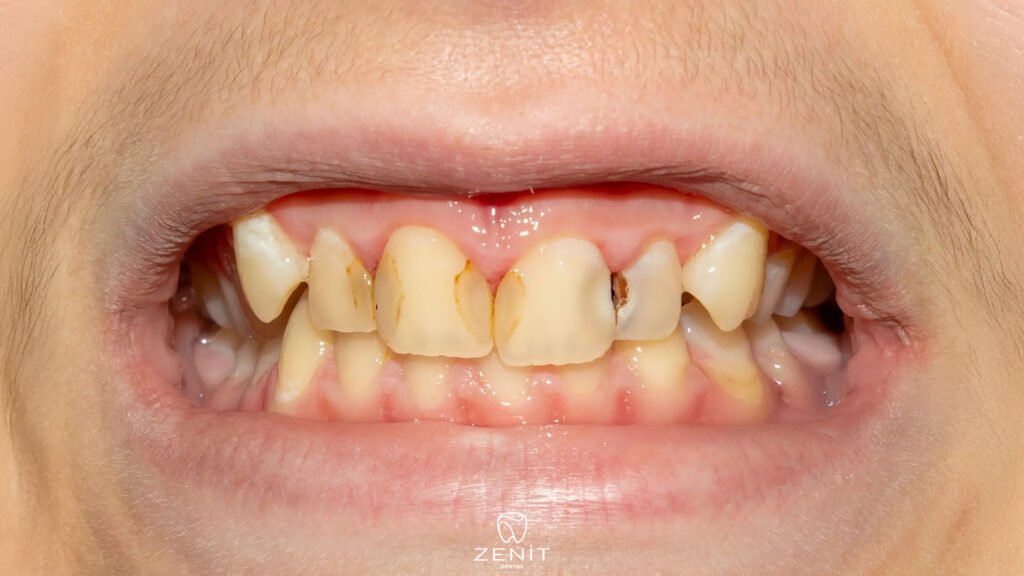
Why Do Tooth Stains Occur?
Every stain on our teeth actually tells a story. Some arise from our daily habits, while others are connected to our body’s internal conditions. Understanding the reasons behind stains is the first step in preventing and treating them.
Food and Drinks: Coffee, tea, red wine, cola, or dark fruit juices… We all love these flavors, but our teeth are a bit more sensitive. Over time, these beverages can build up on the tooth surface, creating yellow or brown stains. A little tip: if you enjoy them, don’t skip brushing afterward!
Smoking and Tobacco Products: If you smoke or use other tobacco products, you may notice significant changes in your tooth color. Nicotine and tar leave stubborn dark stains on the teeth, and brushing alone often isn’t enough.
Poor Oral Hygiene: Not brushing regularly, skipping dental floss, or neglecting mouthwash can lead to plaque buildup, which eventually causes stains. Daily care is the simplest and most effective way to maintain your teeth’s natural color.
Aging: Unfortunately, time affects us all, including our teeth. As the enamel thins, the underlying dentin becomes more visible, giving teeth a slightly yellowish hue. Aging is inevitable, but healthy habits can help slow down this process.
Medications and Health Conditions: Certain medications and health issues can also affect tooth color. For example, tetracycline antibiotics used during childhood can leave permanent stains. Similarly, some antihistamines or mineral deficiencies may change tooth color.
Genetic Factors: Sometimes the color of teeth is completely genetic. Some of us are naturally born with darker toned teeth. In these cases, it’s more about the overall color than specific stains. The good news is that proper care and some professional treatments can even help minimize genetic effects.
Types of Tooth Stains
Tooth stains can basically be divided into two main categories based on their origin: surface stains and deep stains. Each requires a different approach, so identifying the type is important.
Surface Stains: These usually come from daily habits like coffee, tea, or smoking. They accumulate on the outer layer of the tooth and can often be treated with simple but effective methods. Regular dental cleaning, professional dental visits, or some at home whitening techniques can significantly reduce these stains. So dealing with these types of stains is usually possible and often quick.
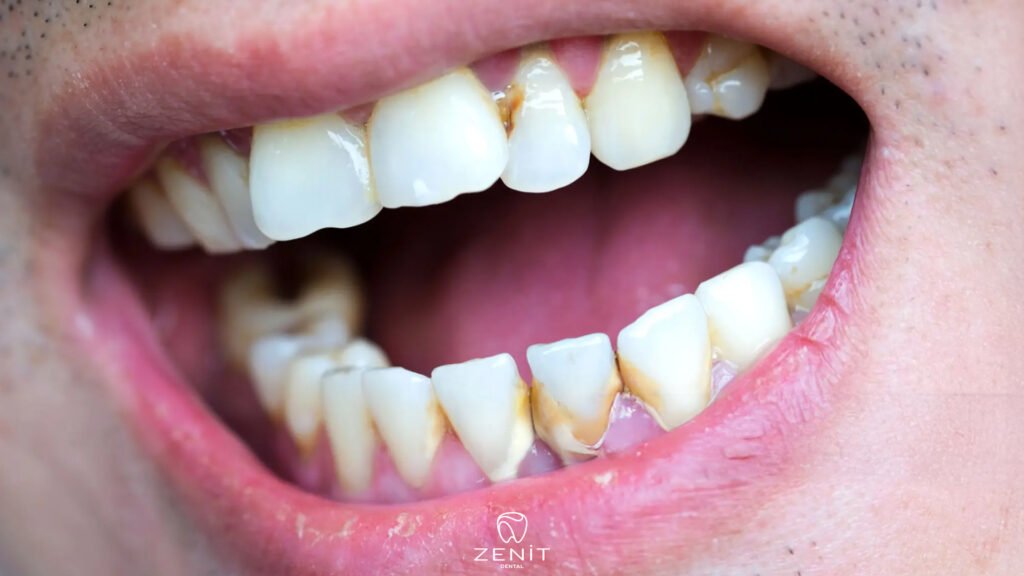
Deep Stains: These are a bit more stubborn. They may penetrate the inner layer of the tooth due to medication, trauma, or genetic factors. Simple at home brushing and whitening methods are usually not enough. Handling these stains often requires professional intervention by a dentist. But don’t worry modern dentistry offers many effective solutions for this type of issue.
How to Prevent Tooth Stains
Completely avoiding tooth stains may not be possible, but small habits can help keep your smile bright for longer. You don’t have to give up your coffee or tea completely, but limiting your intake and adding fibrous foods like apples and carrots, which naturally clean your teeth, can make a difference. Brushing regularly and using dental floss help prevent plaque buildup and reduce staining, while mouthwash protects against bacteria and helps maintain your teeth’s color.
Avoiding smoking and tobacco products is perhaps one of the most effective ways to prevent tooth stains. If you quit, over time you may notice your teeth becoming healthier and returning to a more natural shade. Of course, some stains may be persistent despite all precautions; that’s why visiting your dentist at least once a year for a professional cleaning is crucial for both oral health and preventing further stains. Small but consistent steps are the key to maintaining your smile.
How to Remove Tooth Stains
There are many ways to tackle tooth stains, and which method you choose depends on the type and depth of the stain. Some safe at home whitening kits can be quite effective, especially for light stains. Usually available as gels or strips, these products, when used regularly, can help bring out your teeth’s natural color.
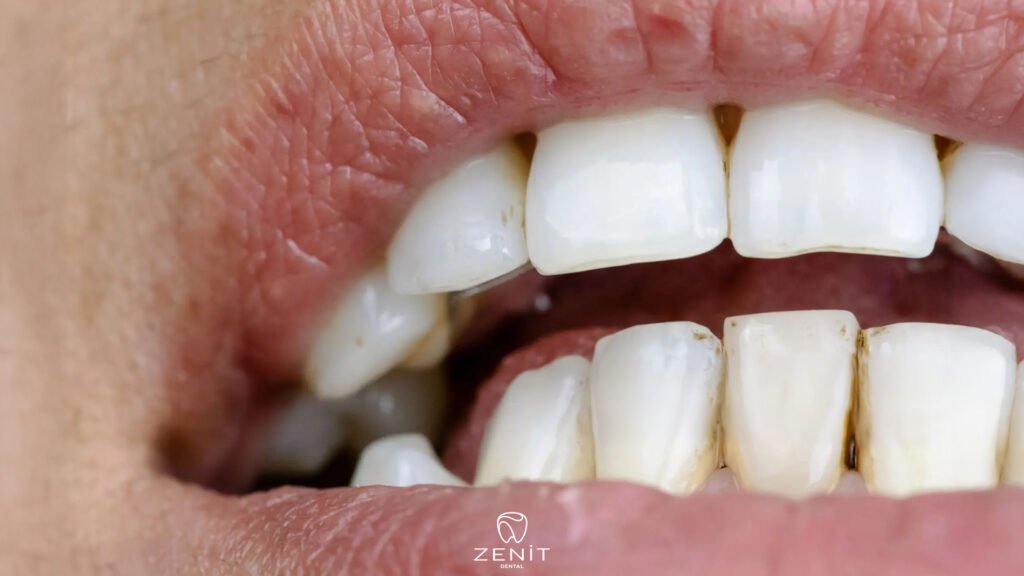
Some people try natural remedies like a mixture of baking soda and lemon to whiten their teeth. However, caution is needed because lemon’s acidic nature can damage tooth enamel, so proper ratios and frequency are important. If you’re looking for a longer lasting and more effective solution, professional whitening is the safest route. Dentists can use lasers or special gels to remove both surface and some deep stains, producing noticeable results in a short time.
In cases of very deep stains or when a complete color change is needed, dental veneers or crowns may be preferred. These methods not only cover the stains but also provide aesthetically satisfying results. This way, achieving a healthy and bright smile becomes possible.
Comments are closed