


How to Use an Interdental Brush
Brushing our teeth regularly is one of the fundamental steps of oral care. However, a conventional toothbrush may not be able to reach all the surfaces where teeth face each other. Plaque and food debris that accumulate especially between the teeth may negatively affect gum health over time. Therefore, daily oral care should include not only cleaning the visible surfaces of the teeth but also cleaning between them. Interdental brushes are oral care tools designed to help clean these areas that a standard toothbrush may have difficulty reaching.
So, how to use an interdental brush, how should the right interdental brush be selected, and what should be considered during use?
What Is an Interdental Brush?
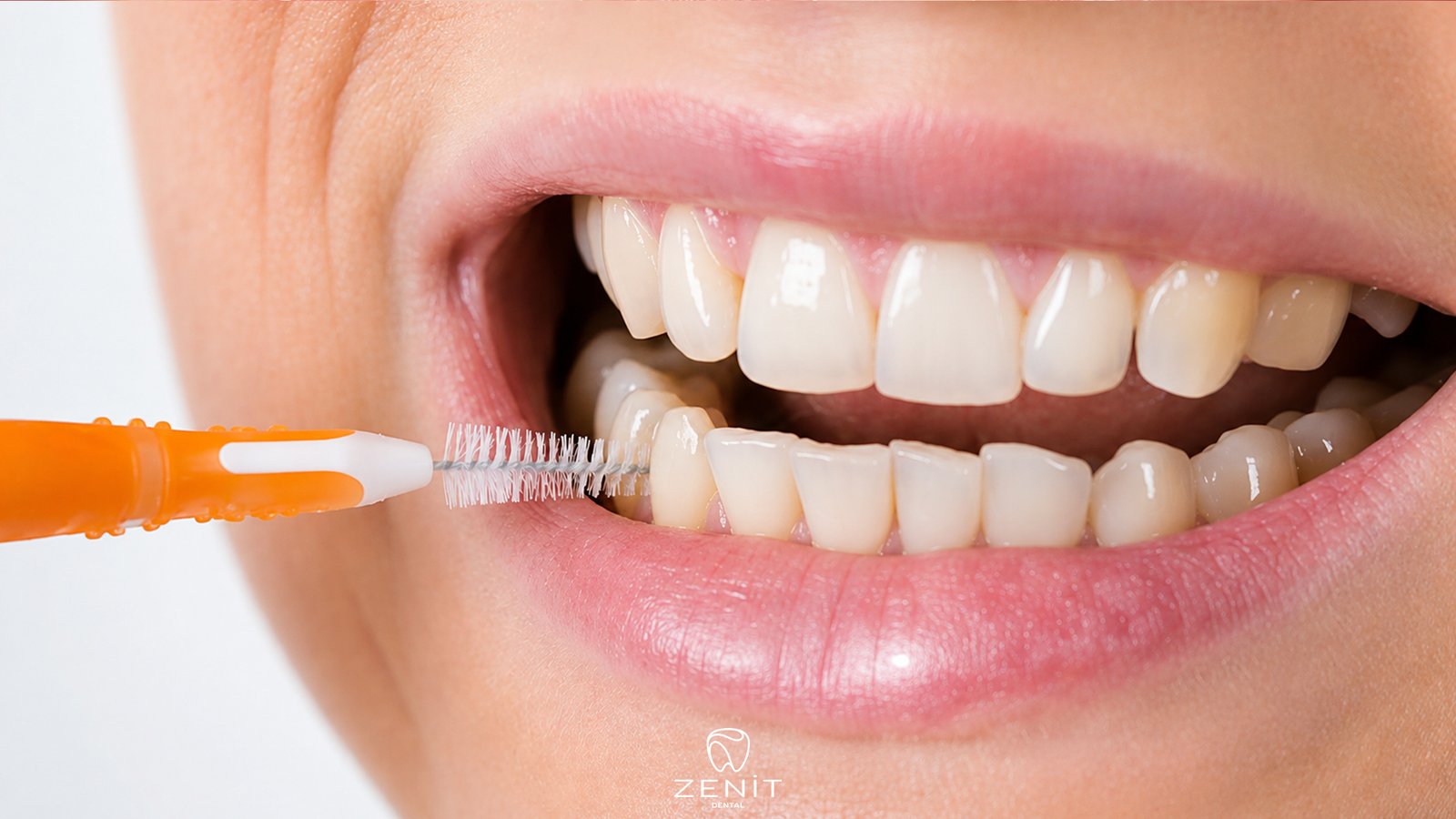
An interdental brush is a thin oral care product used to clean areas between the teeth that a regular toothbrush cannot easily reach. Since the spaces between teeth can vary from person to person, interdental brushes are available in different thicknesses and sizes. They help remove food particles and plaque that accumulate between the teeth.
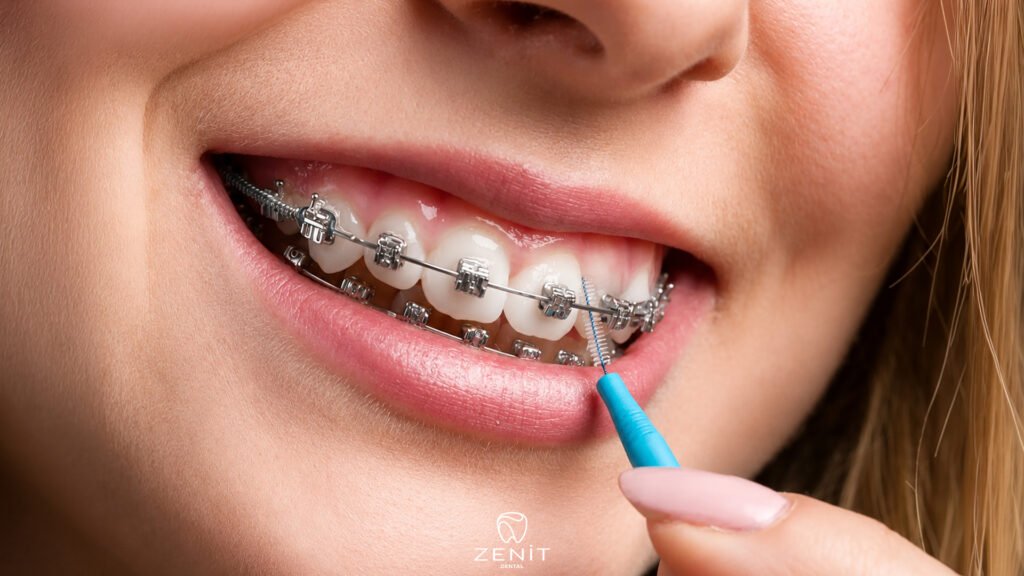
They can be particularly useful for people whose tooth spacing is suitable for interdental brush use. They may also help clean around orthodontic brackets, dental bridges, and certain restorations during orthodontic treatment. For effective and comfortable use, it is important to select an interdental brush that is appropriately sized for the space between the teeth. The American Dental Association also states that interdental brushes may support oral hygiene around orthodontic appliances and dental bridges.
Why Should an Interdental Brush Be Used?
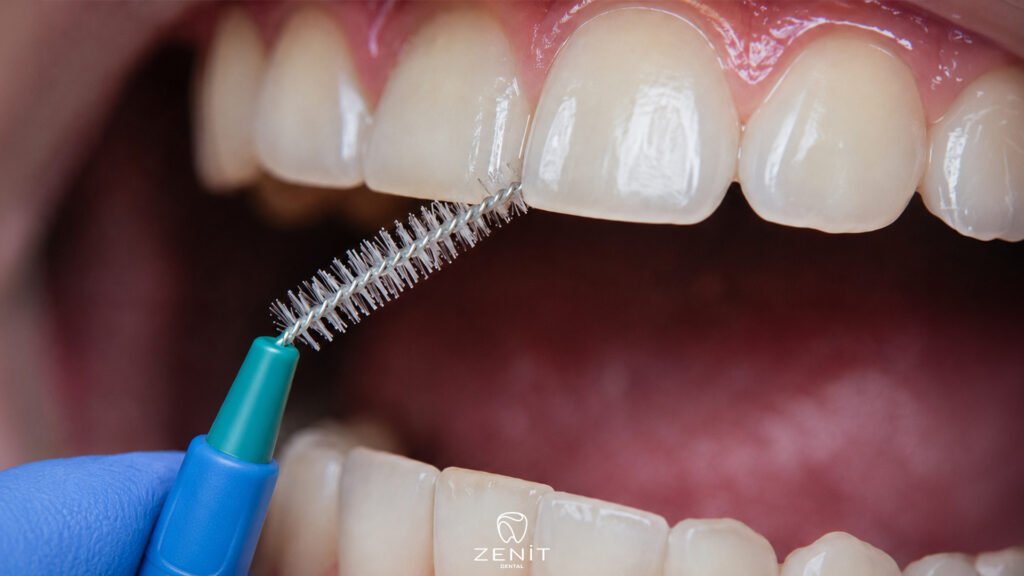
Although the visible surfaces of the teeth can largely be cleaned during daily tooth brushing, it may not always be possible to achieve sufficient cleaning in the narrow spaces between two teeth. Plaque and food debris remaining in these areas may negatively affect gum health over time. For this reason, regularly cleaning between the teeth is an important complementary part of a daily oral care routine.
The American Dental Association states that, in addition to brushing, using interdental cleaning methods such as dental floss or interdental brushes may help reduce plaque buildup and gingival inflammation.
How to Use an Interdental Brush?
When it comes to using an interdental brush, choosing the correct brush size and applying it gently between the teeth are important. The brush should pass between the teeth without requiring excessive pressure and should make contact with the adjacent tooth surfaces. Instead of forcing a brush that does not fit the interdental space, a more suitable size should be selected.
- First, choose a size that is suitable for the spaces between your teeth. The brush should enter the space comfortably and in a controlled manner without creating excessive resistance.
- Hold the brush comfortably between your thumb and index finger. To reach the back teeth, you can adjust the direction and angle of the brush as needed.
- Gently insert it into the space between two teeth. Avoid applying excessive pressure to the gums or forcing the brush into an area where it does not fit.
- Once the brush is positioned between the teeth, move it slowly back and forth. This movement helps the bristles make contact with the side surfaces of both teeth.
- Repeat the process in the other interdental spaces. If the width of the spaces between your teeth varies, you may need interdental brushes in different sizes.
- Rinse the brush with water during and after use. Replace it when the bristles show noticeable wear or when the wire section becomes bent or deformed.
What Size Should an Interdental Brush Be?
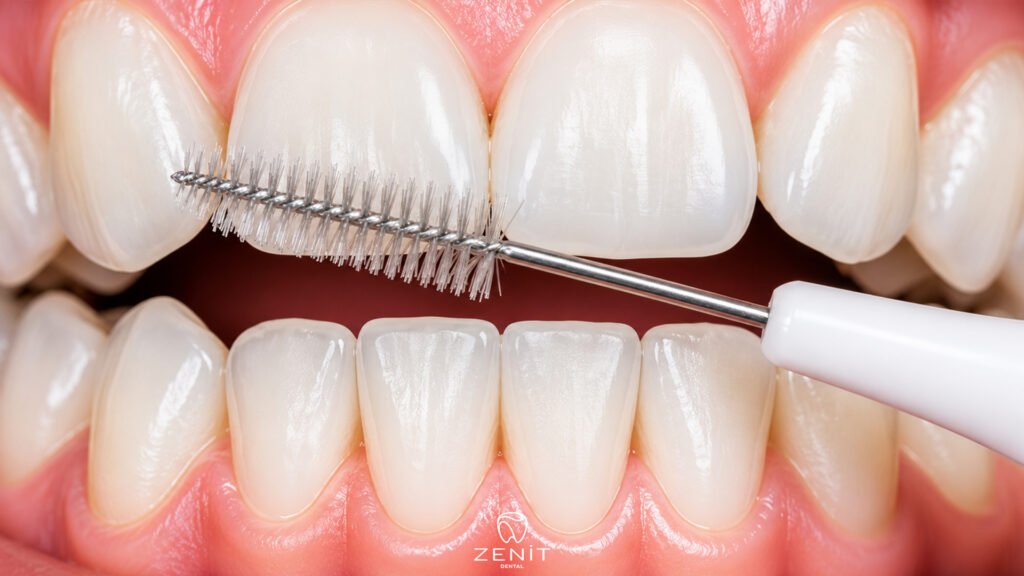
One of the most important considerations when choosing an interdental brush is selecting the correct size. The spaces between teeth are not the same for everyone, and even different areas within the same person’s mouth may have varying widths. Therefore, a single brush size does not necessarily have to be suitable for every tooth.
The right brush should be wide enough for the bristles to make contact with the tooth surfaces as it passes between the teeth, but it should not require excessive force. If the brush constantly bends, does not fit between the teeth, or causes pain during use, a different size may be needed. NHS and Oral Health Foundation resources also state that the brush should fit between the teeth without being forced while still providing sufficient contact.
Especially for people using an interdental brush for the first time, consulting a dentist to determine the appropriate size may be helpful. Some people may need a smaller brush for the front teeth and different sizes for the back teeth.
How Many Times a Day Should It Be Used?
It is generally recommended to use an interdental brush once a day as part of a regular oral care routine. The important point is to make interdental cleaning a consistent habit rather than using the brush only when food becomes trapped between the teeth.
Many people may find it more practical to use an interdental brush during their evening oral care routine. Regular tooth brushing can be completed after cleaning between the teeth. However, the frequency of use may vary according to the dentist’s recommendations for people undergoing periodontal treatment, using orthodontic appliances, or having specific oral care needs.
Is Gum Bleeding Normal When Using an Interdental Brush?
Some people who start using an interdental brush for the first time may experience bleeding, especially if there is existing plaque buildup or gum sensitivity. However, gum bleeding should not always be considered simply part of the adjustment period. Bleeding, red, swollen, or sensitive gums may be among the signs of gum disease.
If the bleeding continues, significant pain occurs during use, or there is swelling and sensitivity in the gums, a dentist should be consulted. In addition, using an interdental brush that is too large or forcing the brush between the teeth may also irritate the surrounding tissues.
What Should You Consider When Using an Interdental Brush?
One of the most common mistakes is trying to force an interdental brush into a space where it does not fit. If the brush does not pass comfortably between the teeth, a different size should be selected. Another important point is not to use the interdental brush only when food becomes trapped. The purpose of interdental cleaning is not only to remove visible food debris but also to support daily plaque control.
Applying excessive pressure with the brush, continuing to use a worn or deformed product, or applying direct force to the gum tissue should also be avoided. Interdental cleaning should be performed with gentle and controlled movements.