


Implant or Bridge?
Oral health is just as important as overall health, though it’s sometimes overlooked. When we lose a tooth or a few teeth we realize how much it affects our daily life; smiling, eating, and even talking may not feel as enjoyable as before. This question often lingers in people’s minds: “Should I get an implant for my missing tooth, or would a bridge be better?”
Both methods are effective, safe, and long lasting solutions for replacing missing teeth. However, figuring out which one suits your dental structure, oral health, and lifestyle can sometimes be confusing. For some, an implant offers a natural feel and a long lasting solution, while in other cases, a bridge may be faster and more cost effective.
What is a Bridge?
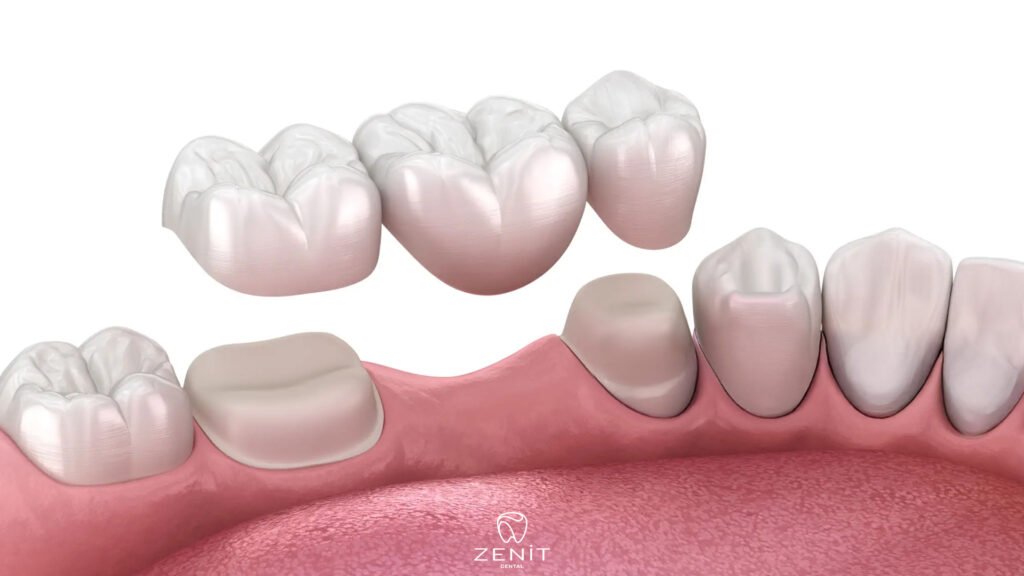
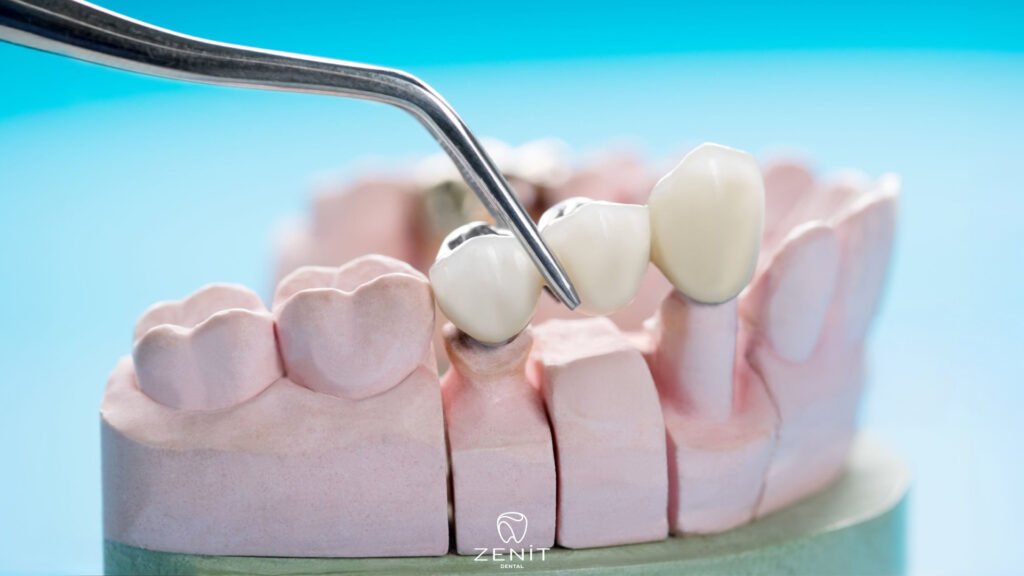
A bridge is a solution that fills the gap left by a missing tooth by relying on the neighboring teeth. As the name suggests, it “bridges” the space between two teeth. It’s usually made from porcelain or zirconium and provides a very natural looking appearance.
In this method, the teeth right next to the missing tooth are slightly filed down, and a cap is placed over them. This closes the gap and restores a structure that’s close to the original tooth’s function.
One of the biggest advantages of a bridge is that it can usually be completed fairly quickly and is more affordable than implants. It also doesn’t require surgery, so there’s no major procedure on your gums or jawbone. For many people, this is a significant relief.
Of course, there are some downsides. First, the neighboring healthy teeth need to be filed, so you’re making a small “sacrifice” of your natural teeth. Also, because a bridge doesn’t directly support the jawbone, it can’t prevent bone loss over time. If the gap is large or the bridge has been in place for many years, issues may arise with the supporting teeth.
What is an Implant?
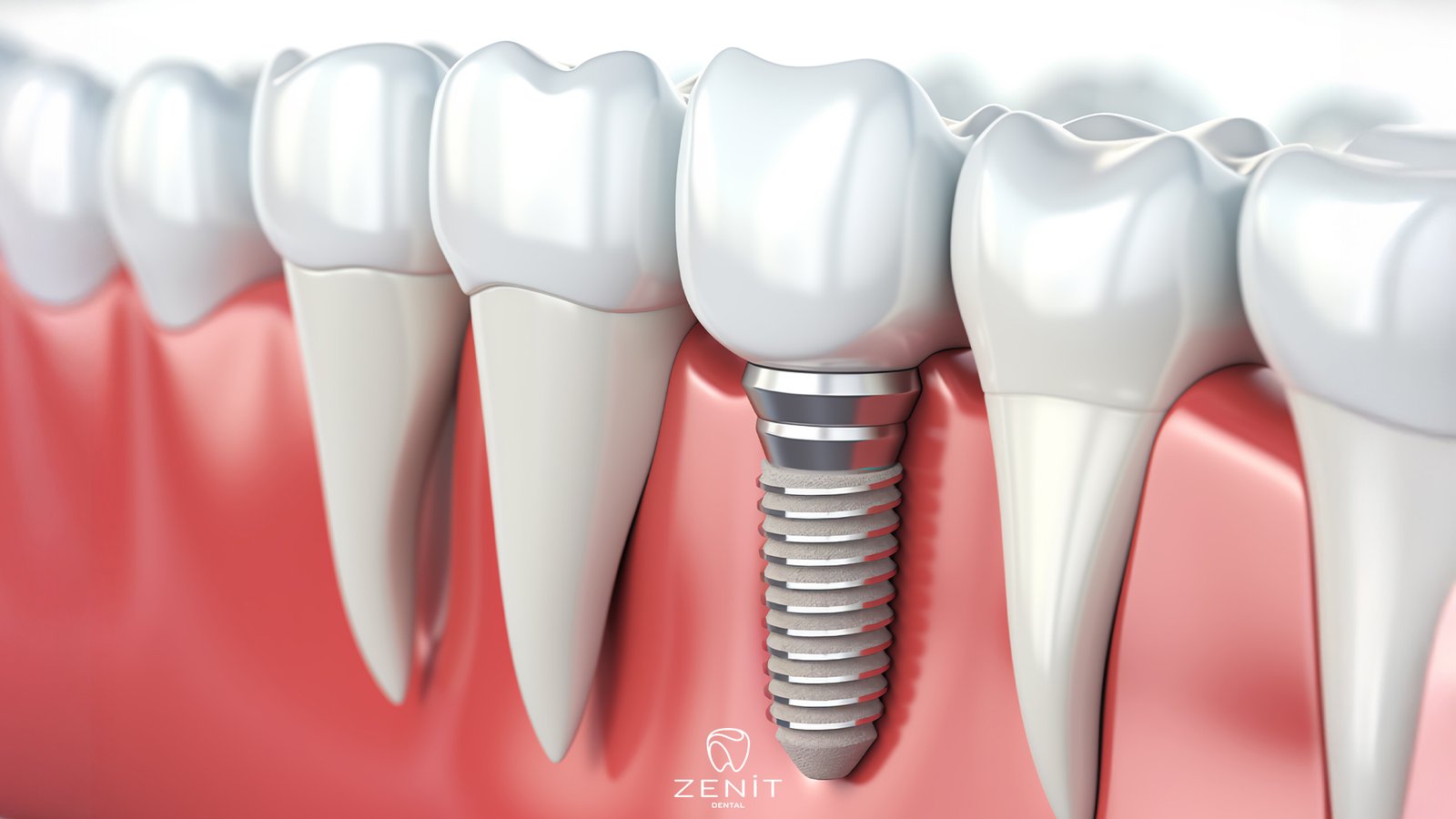
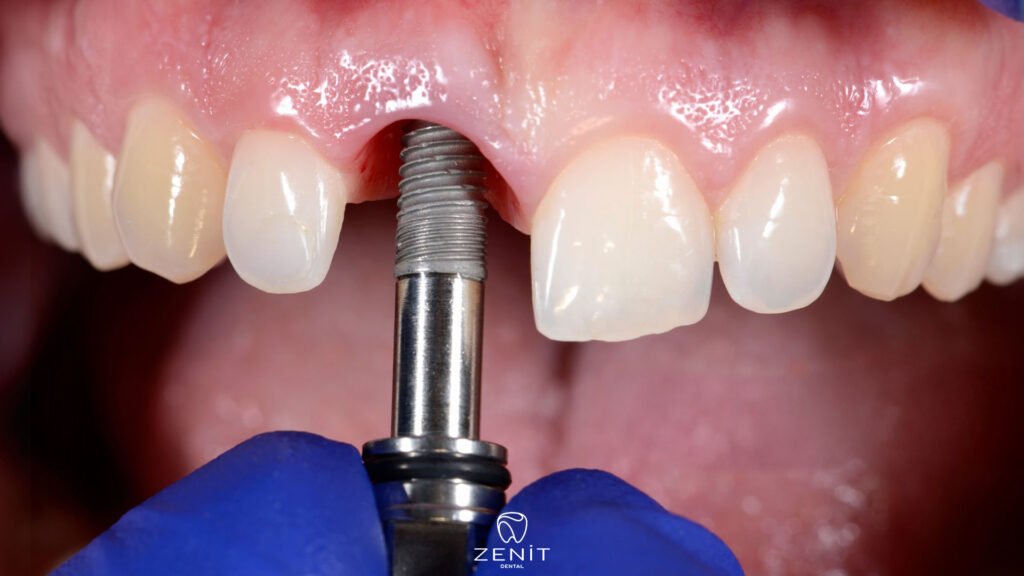
An implant is a method that restores your missing tooth almost to its natural state. At its core, it involves placing a small titanium screw that mimics the root of your lost tooth. This screw is inserted into the jawbone and gradually integrates with it. Then, a dental crown is placed on top, bringing your missing tooth back into your life.
One of its greatest advantages is that it replaces the missing tooth without affecting your healthy neighboring teeth. You don’t have to “sacrifice” them by filing. Plus, since it directly supports the jawbone, it helps prevent bone loss over time. This is a huge benefit for both aesthetics and function in the long run. You can chew comfortably and smile with confidence.
Implants are also very durable. With proper care and regular check ups, they can last 20 years or even longer, making them a real “investment” in your dental health.
Of course, like any method, implants have some downsides. They are usually more expensive than bridges. The procedure requires minor surgery, so the health of your gums and jawbone is important. In some cases, additional procedures such as bone grafts may be needed. Also, it can take a few months for the implant to fully integrate with the bone, during which a temporary crown may be used. Patience and trust in the process are key.
Which One Should You Choose?
The choice really depends on your dental structure, oral health, and lifestyle. Here are some common scenarios and which option may be more suitable:
Single missing tooth: If you’re missing just one tooth and the neighboring teeth are healthy, an implant is usually the best choice. It fills the gap without affecting adjacent teeth and provides a very natural result.
Multiple missing teeth: If you’ve lost several teeth in a row, a bridge alone may not always be the ideal solution. Combined treatments, like implant supported bridges, can offer both durability and a natural look.
Problems with neighboring teeth: If adjacent teeth have decay, root issues, or large restorations, filing them for a bridge may not be wise. In such cases, an implant is often the better choice, as it protects your healthy teeth while replacing the missing one.
Jawbone condition: If you have bone loss or insufficient jawbone, placing an implant may be more challenging. Sometimes bone grafts are required, making the process longer and more complex. In these situations, a bridge might be a faster and simpler solution.
Budget and timing: If a quick solution and lower cost are priorities, a bridge is usually more practical. But if you want a durable, long term result, an implant may take more time and investment, yet often provides a lasting solution.
Aesthetics and Function: Which is Better?
When it comes to replacing missing teeth, aesthetics and function are often top priorities. Here, there are some differences between implants and bridges.
Implants usually have the edge in natural appearance and chewing function. Especially for front teeth, a natural looking smile is essential, and implants provide a big advantage. They adapt to the gumline more easily, resulting in a more natural outcome. Bridges are often successful too, but over time, slight differences in the gumline or sensitivity in neighboring teeth can appear.
Functionally, implants replace the missing tooth almost exactly and transfer chewing forces directly to the jawbone. This allows you to eat comfortably and supports bone health. Bridges, however, place some load on neighboring teeth, which can lead to wear or sensitivity over time, potentially affecting your dental health in the long run.
Comfort and Maintenance
Once you’ve replaced a missing tooth, the key is keeping it healthy and feeling comfortable in daily life. Using a bridge requires a bit more attention when brushing and flossing because food can get trapped underneath. If not cleaned properly, it can lead to gum problems or decay in the supporting teeth. So while bridges can be convenient in the short term, they do need a little extra care.
Implants, on the other hand, can be brushed like natural teeth, making daily care easier. Still, it’s important to keep the area around the implant clean. Regular dental check ups and proper oral hygiene help ensure your implant lasts for many years. In this sense, implants often provide an advantage in both comfort and longevity.
Remember, whichever option you choose, maintaining your oral health and taking care of your new tooth is completely in your hands. Do yourself a favor and consult a dentist to replace your missing teeth; don’t wait your smile and chewing comfort deserve it!
Comments are closed