


What is fissure sealant ?Why Is It Applied?
As parents, we want our children to grow up healthy. We pay close attention to their nutrition, make sure they attend regular medical check ups, and do our best to support their education. However, some small yet highly effective preventive measures that can help avoid future health problems are sometimes overlooked. Oral and dental health is one of them.
Many parents assume that if their child brushes their teeth regularly, their oral care routine is complete. While regular brushing is certainly very important, it may not always be enough on its own. The surface structure of newly erupted permanent molars can be particularly prone to decay. The tiny grooves and pits on these teeth can easily trap food particles and bacteria. Since toothbrush bristles cannot always reach these narrow areas effectively, the risk of cavities may increase over time.
Although the name may sound a little complicated at first, it is actually a simple and highly effective preventive dental treatment. Dental sealants, also known as fissure sealants, involve covering the deep grooves on the chewing surfaces of teeth with a special protective material. This makes it much harder for food debris and bacteria to accumulate in these areas, helping to significantly reduce the risk of tooth decay.
Modern dentistry focuses not only on treating problems once they occur but also on preventing them before they start. This approach is especially important because a cavity that develops during childhood can lead to more extensive dental treatments later in life. With simple preventive procedures that take only a few minutes, it may be possible to help children maintain healthy teeth for many years.
Dental sealants are among the most successful examples of this preventive approach. Since the procedure is painless, quick, and highly comfortable, it is often preferred by both children and parents. When combined with good oral hygiene habits and regular dental check ups, especially in children who are at a higher risk of cavities, it can provide very effective protection.
What Is a Dental Sealant?
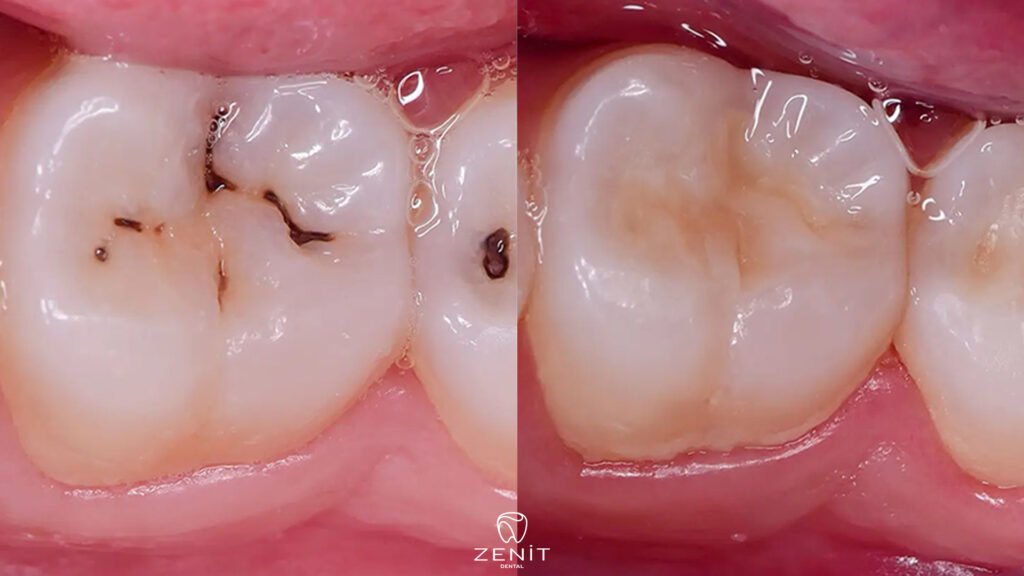
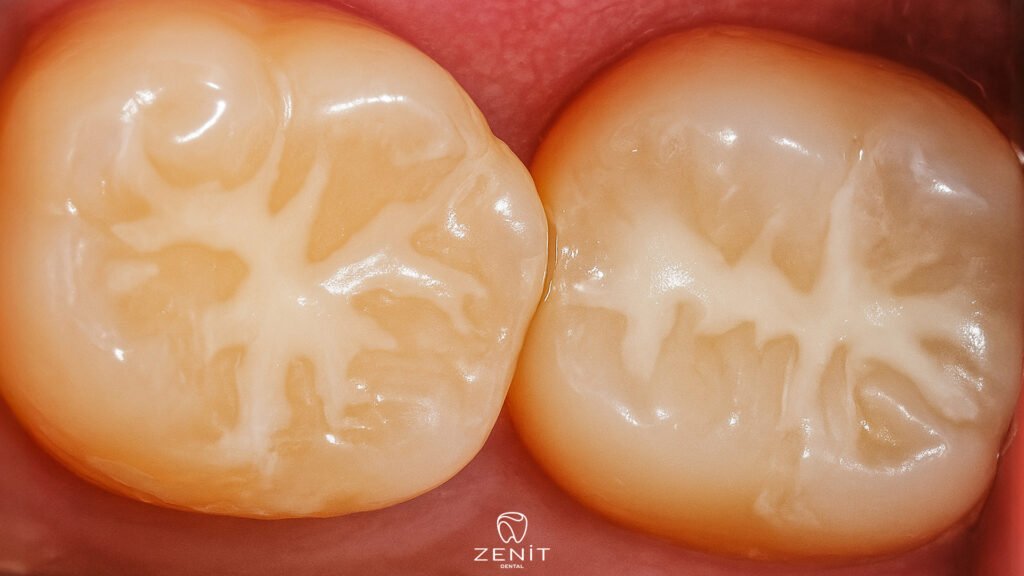
The molars located at the back of our mouths are responsible for grinding and chewing food. If you look closely at their chewing surfaces, you will notice small grooves, pits, and narrow fissures. In dentistry, these natural grooves are called “fissures.”
In children, especially in newly erupted permanent molars, these fissures can be quite deep. Even when a child has developed a regular brushing routine, toothbrush bristles may not always be able to clean these narrow and deep areas completely. As a result, food particles and bacteria can accumulate over time, creating an environment where cavities may develop.
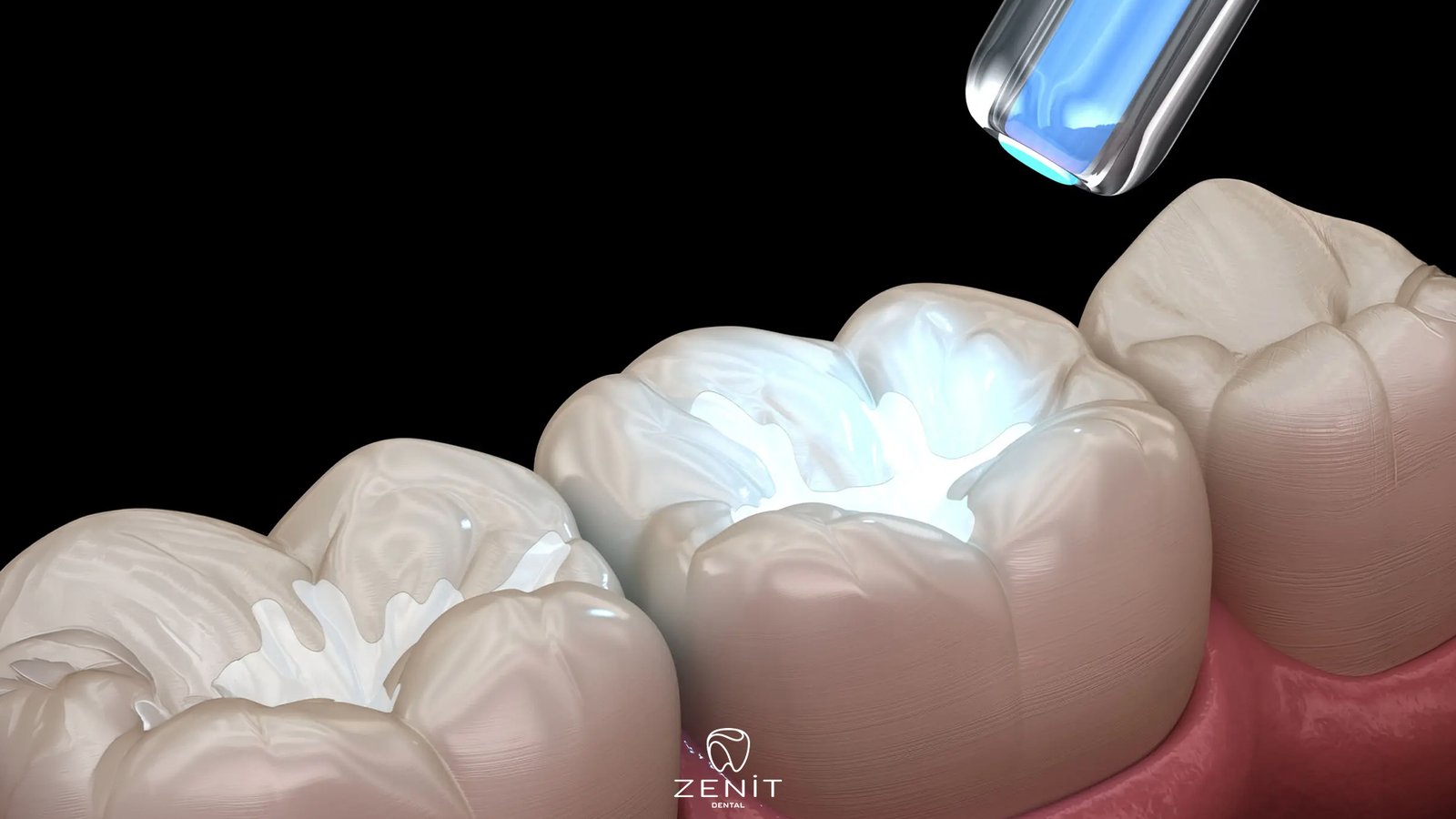
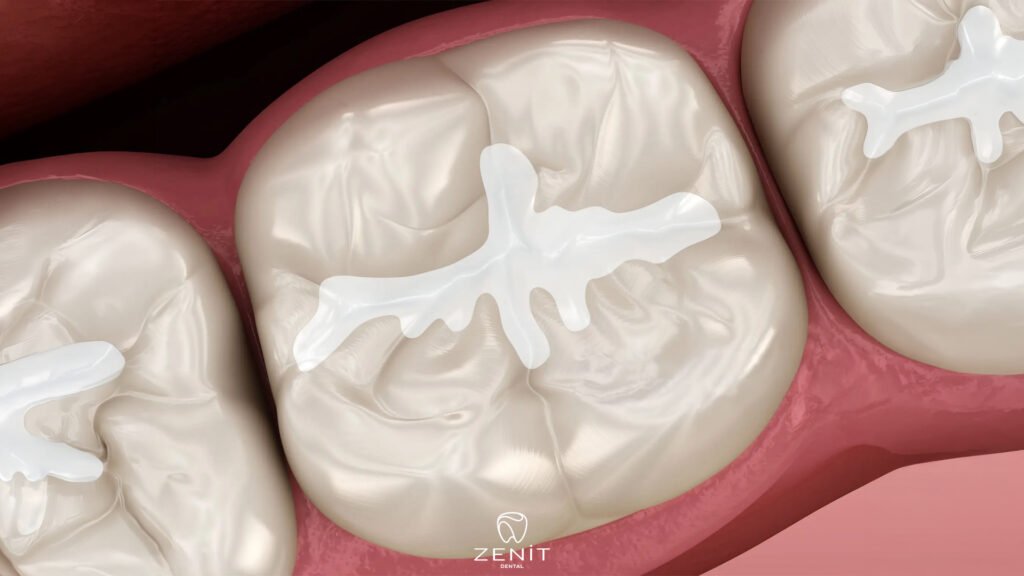
Dental sealants were developed specifically to help reduce this risk. During the procedure, the deep grooves on the chewing surfaces of the teeth are covered with a special flowable protective material. This creates a barrier that makes it more difficult for bacteria and food debris to settle into these areas.
Although it may seem like a simple procedure, dental sealants can play a significant role in protecting children’s teeth from decay. Even better, the treatment is completely painless, does not require drilling or removal of tooth structure, and can be completed in a short amount of time. For these reasons, it is considered one of the most commonly recommended preventive treatments in pediatric dentistry today.
Why Is It More Commonly Recommended for Children?
One of the main reasons dental sealants are most often recommended for children is that the period when permanent teeth first erupt is one of the most vulnerable times for cavity development. The first permanent molars, which typically appear around the age of six, and the second permanent molars, which usually erupt between the ages of 11 and 13, may be particularly susceptible to decay because of the deep grooves on their chewing surfaces.
Many parents mistakenly believe that these newly erupted teeth are still baby teeth. In reality, they are permanent teeth that are expected to remain in the mouth for a lifetime if they stay healthy. That is why protecting them from the very beginning is so important.
Even if children brush their teeth regularly, thoroughly cleaning the narrow and deep grooves on molars is not always easy. This is especially true during the years when brushing habits are still developing. Food particles and bacteria can collect in these hard to reach areas, eventually increasing the risk of cavities. Dental sealants provide an extra layer of protection, helping to keep these vulnerable teeth healthy during some of the most important years of a child’s oral development.
How Is a Dental Sealant Applied?
One of the most common questions parents have about dental sealants is how the procedure is performed. Many parents are understandably concerned about whether their child will experience any discomfort. The good news is that dental sealant application is a very simple, quick, and comfortable procedure.
In fact, many children barely realize they have undergone a dental treatment once the procedure is complete. This is because nothing is done that would cause pain. There is no drilling, cutting, or removal of tooth structure involved, making it a very child friendly experience.
The process begins with the dentist carefully cleaning the surface of the tooth that will receive the sealant. The goal is to remove plaque and any debris, creating a clean surface for the application. Next, a special solution is applied to prepare the tooth surface. This step helps the sealant material bond more effectively to the tooth.
Once the tooth is ready, the flowable sealant material is applied to the deep grooves on the chewing surface of the tooth. Finally, a special curing light is used to harden the material within seconds, creating a durable protective layer.
The entire procedure is usually completed in just a few minutes. There is no need for anesthesia, no injections are required, and the tooth is not drilled or altered in any way. Since children do not experience pain during the process, dental sealants are considered one of the most comfortable preventive treatments, even for children who feel anxious about visiting the dentist.
What Are the Benefits of Dental Sealants?
When people think of dental sealants, the first benefit that comes to mind is cavity prevention. While protecting teeth against decay is certainly the primary purpose of the treatment, its advantages extend beyond that. Dental sealants can play an important role in maintaining children’s oral health and helping prevent future dental problems.
They Can Help Reduce the Risk of Cavities
The deep grooves found on children’s molars are ideal places for bacteria and food particles to accumulate. Dental sealants cover these vulnerable areas with a protective layer, making it more difficult for harmful substances to settle and create an environment where cavities can develop. Numerous studies have shown that sealants applied at the right time and in the proper way can significantly reduce the risk of tooth decay.
They May Help Prevent the Need for More Extensive Treatments
A small cavity that develops during childhood can gradually progress into a more serious dental problem if left untreated. What starts as a minor issue may eventually require fillings, root canal treatment, or even tooth extraction in some cases. Preventive treatments such as dental sealants can help reduce these risks and support long term oral health by keeping teeth protected from the start.
They Can Be a Cost Effective Preventive Solution
As with many areas of healthcare, preventive dentistry is often more affordable than treating problems after they develop. Taking steps to protect teeth before cavities form can reduce the likelihood of needing more costly dental treatments in the future. For this reason, dental sealants are often considered a smart investment for both oral health and family budgets.
They Can Create a Positive Dental Experience for Children
Many children feel nervous when sitting in a dental chair for the first time. Because dental sealant application is painless, quick, and comfortable, it can help children develop a positive relationship with dental care. When early dental visits are associated with comfort and trust rather than fear, children may be more likely to maintain regular dental check ups as they grow older..