


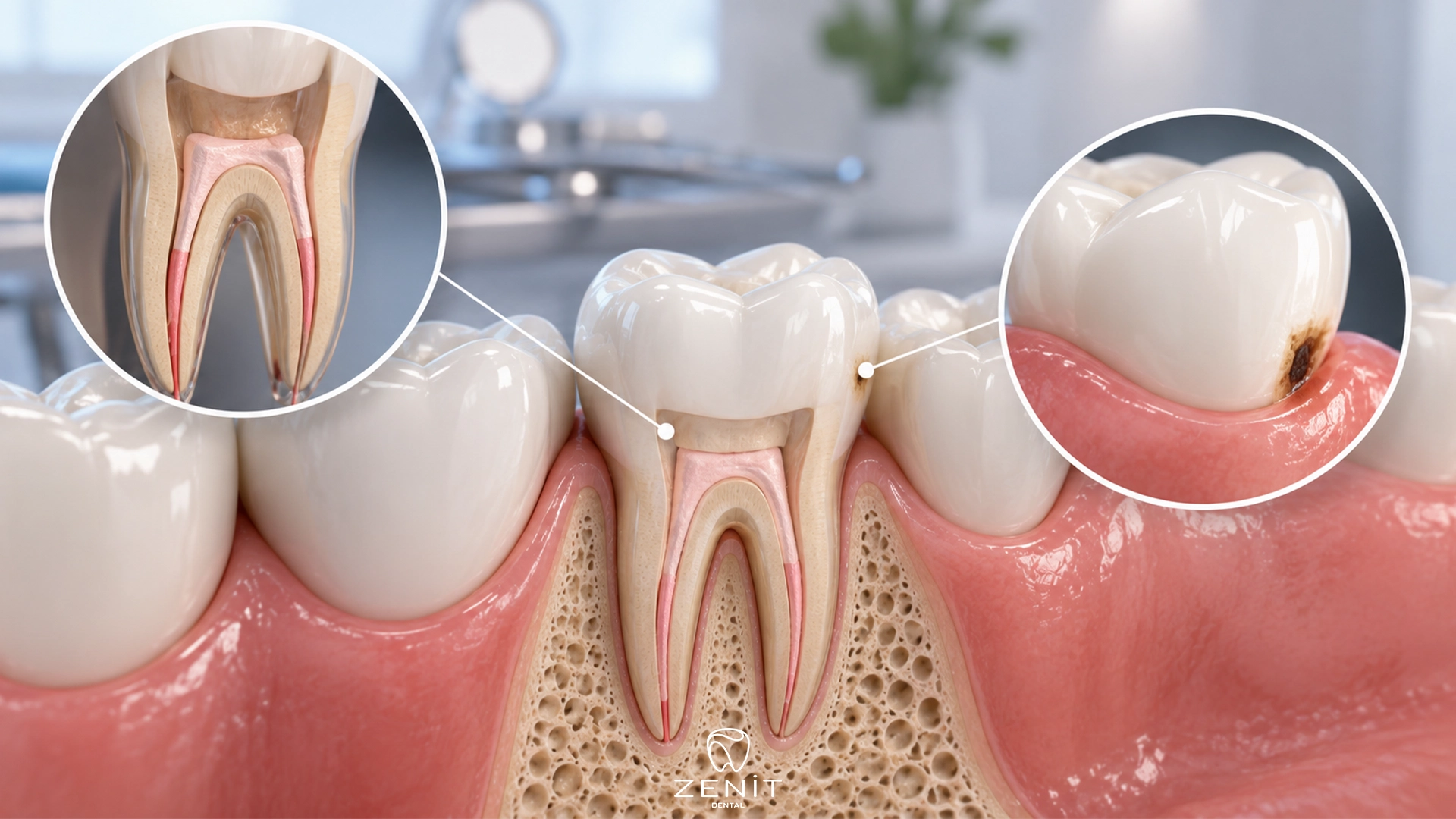
Root canal treatment is an important dental procedure performed when the pulp tissue inside a tooth becomes infected or irreversibly damaged. A successful root canal treatment can help preserve a tooth that might otherwise need to be extracted, allowing it to remain functional for many years. However, one of the most common questions patients ask is about the lifespan of a root canal-treated tooth and whether the tooth can develop decay again in the future.
A tooth that has undergone root canal treatment can remain functional for many years with proper treatment and good oral hygiene. However, the idea that “the tooth has had a root canal, so nothing can happen to it anymore” is incorrect. Just like any other natural tooth, a root canal-treated tooth can develop new decay on its outer surface, fracture, or experience problems involving the surrounding gums and bone.
For this reason, the lifespan of a root canal-treated tooth depends not only on the root canal procedure itself, but also on the quality of the treatment, the amount of healthy tooth structure remaining, the filling or crown placed afterward, the patient’s oral hygiene habits, and regular dental check-ups.
In this guide prepared by Zenit Dental, we explain how long root canal-treated teeth can last, whether they can decay again, and what you can do to help extend their lifespan.
How Long Does a Root Canal-Treated Tooth Last?
One of the most frequently asked questions is: “How many years can a root canal-treated tooth last?”
There is no single answer that applies to every patient. The lifespan of a root canal-treated tooth can vary from person to person and from tooth to tooth.
A tooth that has been successfully treated and properly restored may remain in the mouth for many years. Some root canal-treated teeth continue to function without any problems for a very long time, while others may require additional treatment sooner.
The root canal treatment itself is not the only factor that determines longevity. The condition of the tooth before treatment, the amount of tooth structure that was lost, the quality of the final restoration, and the patient’s oral hygiene habits are also extremely important.
Preserving as much healthy tooth structure as possible is especially important in back teeth, which are exposed to greater chewing forces.
Can a Root Canal-Treated Tooth Decay Again?
Yes. A root canal-treated tooth can develop decay again.
There is a common misconception that once a tooth has received root canal treatment, it can no longer develop cavities.
During root canal treatment, the infected pulp and nerve tissue inside the tooth are removed. However, the enamel and dentin that make up the outer structure of the tooth remain exposed to the oral environment.
This means that bacteria can still cause new decay in a root canal-treated tooth.
Over time, leakage around the edges of a filling or crown, food accumulation, plaque buildup, and inadequate oral hygiene may contribute to the development of new cavities.
Therefore, maintaining good daily oral hygiene after treatment is extremely important for protecting the lifespan of a root canal-treated tooth.
Another important question is: “If the nerve has been removed, how will I know if the tooth is decaying?”
Because the nerve tissue inside the tooth has been removed, some cavities may not cause noticeable pain during their early stages. This is one of the reasons regular dental examinations are especially important for patients with root canal-treated teeth.
Why Can a Root Canal-Treated Tooth Decay Again?
There are several reasons why a tooth that has undergone root canal treatment may develop new decay.
Poor Oral Hygiene
Root canal-treated teeth still need to be brushed regularly, and the spaces between the teeth must also be cleaned properly.
If plaque continues to accumulate on the surface of the tooth, bacteria may produce acids that gradually damage the enamel and cause new cavities.
Having root canal treatment does not make a tooth completely resistant to decay.
Leakage Around a Filling
After root canal treatment, the tooth is usually sealed with a filling or another type of dental restoration.
Over time, the edges of the filling may wear down, crack, or develop small gaps.
These spaces can make it easier for bacteria to reach the underlying tooth structure and contribute to new decay.
Decay Under a Crown
Some root canal-treated teeth are restored with dental crowns to improve strength and protect the remaining tooth structure.
However, having a crown does not completely eliminate the risk of decay.
If plaque accumulates where the crown meets the tooth, or if the crown no longer fits properly, decay may develop underneath or around the restoration.
Frequent Consumption of Sugary and Acidic Foods
Frequently consuming sugary foods and drinks can increase acid production by bacteria in the mouth.
This may raise the risk of cavities around root canal-treated teeth, just as it does with natural untreated teeth.
What Determines the Lifespan of a Root Canal-Treated Tooth?
The lifespan of a root canal-treated tooth is influenced by several factors that must be considered together.
The Success of the Root Canal Treatment
During treatment, the root canals must be properly cleaned, shaped, disinfected, and filled.
If infected tissue or bacteria remain within the root canal system, reinfection may develop later.
For this reason, proper treatment performed using appropriate techniques is an important factor in long-term success.
The Amount of Healthy Tooth Structure Remaining
If the tooth had a very large cavity before root canal treatment, a significant amount of tooth structure may already have been lost.
Generally, the more healthy tooth structure that can be preserved, the better the tooth’s long-term structural stability.
Teeth with extensive loss of tooth structure may have a higher risk of fracture.
The Restoration After Root Canal Treatment
Proper restoration of the upper part of the tooth after root canal treatment is extremely important for long-term success.
A filling may be sufficient for some teeth, while teeth with extensive structural loss may require additional restorative treatments or a crown.
The most appropriate treatment depends on the location of the tooth, the amount of remaining healthy tooth structure, and the forces placed on the tooth.
Oral Hygiene
Daily oral hygiene plays an important role in the lifespan of a root canal-treated tooth.
Regular brushing, cleaning between the teeth, and controlling plaque help protect both natural teeth and root canal-treated teeth.
Regular Dental Check-Ups
Problems affecting a root canal-treated tooth may not always cause obvious symptoms in the early stages.
During regular dental examinations, the tooth and surrounding tissues can be evaluated so that potential problems may be identified as early as possible.
Why Can a Root Canal-Treated Tooth Become More Vulnerable?
After root canal treatment, the living pulp tissue inside the tooth has been removed.
However, one of the main reasons a treated tooth may become more vulnerable is that a large amount of tooth structure may already have been lost before treatment.
It is important not to assume that root canal treatment itself automatically makes a tooth “weak” or guarantees that it will fracture.
In many cases, the greater concern is the amount of damage the tooth had already sustained before it required root canal treatment and how much healthy structure remains afterward.
Therefore, when evaluating the lifespan of a root canal-treated tooth, the overall structural condition of the tooth should be considered alongside the root canal treatment itself.
Can a Root Canal-Treated Tooth Break?
Yes, a root canal-treated tooth can fracture.
This can be particularly relevant for back teeth that have lost a significant amount of structure because of large cavities and are exposed to strong chewing forces.
Biting very hard foods directly with the treated tooth, chewing ice, or having habits such as clenching or grinding the teeth may increase the risk of fracture.
Small cracks or fractures may sometimes be repaired using restorative dental treatments.
However, when a fracture extends deeply toward or into the root, treatment options may become more limited.
For this reason, it is important to follow your dentist’s recommendations regarding restoration and use of the treated tooth.
Can a Root Canal-Treated Tooth Become Infected Again?
In some cases, yes.
The purpose of root canal treatment is to remove infected tissue from the root canal system, disinfect the area, and seal the canals to reduce the risk of microorganisms entering again.
However, reinfection can sometimes occur.
Possible causes include:
- Complex root canal anatomy
- Previously undetected canals
- New tooth decay
- Leakage around a filling or crown
- Cracks in the tooth
- Bacteria re-entering the root canal system
In these situations, the dentist may evaluate the tooth through a clinical examination and appropriate imaging before determining the most suitable treatment option.
Can a Root Canal-Treated Tooth Hurt?
Because the nerve tissue inside the tooth is removed during root canal treatment, the tooth is not expected to experience pain originating from the pulp in the same way an untreated tooth might.
However, the periodontal ligament, bone, gum tissue, and other structures surrounding the tooth remain alive.
For this reason, pain or sensitivity may still occur because of:
- Infection around the root tip
- Gum disease or inflammation
- A crack or fracture
- A filling or crown that is too high
- Inflammation of the surrounding tissues
If you experience new pain, swelling, or sensitivity while chewing with a tooth that has previously undergone root canal treatment, a dental evaluation is recommended.
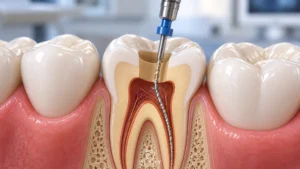
How Can You Extend the Lifespan of a Root Canal-Treated Tooth?
The lifespan of a root canal-treated tooth can be supported significantly through proper oral care and regular dental examinations.
Brush Your Teeth Regularly
Brushing at least twice a day with an appropriate toothbrush and fluoride toothpaste can help reduce plaque accumulation.
The area around a root canal-treated tooth should be cleaned with the same level of care as the rest of your teeth.
Clean Between Your Teeth
A toothbrush cannot always reach every surface between the teeth.
Using dental floss or another interdental cleaning method recommended by your dentist can help reduce plaque accumulation, particularly around the edges of fillings and crowns.
Be Careful with Hard Foods
Chewing ice, cracking hard shells with your teeth, or biting very hard objects may cause cracks or fractures.
Extra care may be necessary for root canal-treated teeth with large restorations.
Do Not Ignore Teeth Grinding or Clenching
Bruxism, which refers to grinding or clenching the teeth, can place significantly greater forces on the teeth than normal chewing.
This can affect not only root canal-treated teeth but also healthy natural teeth.
If you suspect that you grind or clench your teeth, you should discuss this with your dentist.
Attend Regular Dental Check-Ups
Regular examinations are among the most important factors affecting the lifespan of a root canal-treated tooth.
When a small problem is identified early, it may be easier to manage before more extensive damage occurs.
Does Every Root Canal-Treated Tooth Need a Crown?
It would not be accurate to say that every root canal-treated tooth always requires a crown.
The need for a crown depends on several factors, including:
- Whether the tooth is located in the front or back of the mouth
- The amount of healthy tooth structure remaining
- The extent of decay or fracture
- The chewing forces placed on the tooth
- The condition of existing restorations
For back teeth with significant structural loss, restorative options designed to protect the tooth against fracture may be considered.
The most appropriate treatment can only be determined after a clinical examination.
What Happens If a Root Canal-Treated Tooth Develops Decay?
Finding new decay in a root canal-treated tooth does not automatically mean the tooth must be extracted.
Depending on the size and location of the cavity, the existing filling or restoration may be removed, the decay cleaned out, and the tooth restored again.
However, if decay has progressed very deeply, the root structure has been damaged, or a serious fracture is present, other treatment options may need to be considered.
For this reason, early detection of decay is extremely important.
Can Root Canal Treatment Be Repeated?
In some cases, a tooth that has previously undergone root canal treatment can be treated again.
This procedure is generally referred to as root canal retreatment or endodontic retreatment.
Retreatment may be considered if the tooth develops another infection, if a canal was missed during the previous procedure, or if there is a problem with the existing root canal filling.
However, not every tooth is suitable for retreatment.
The treatment decision depends on the tooth’s clinical condition and radiographic findings.
How Can You Improve the Lifespan of a Root Canal-Treated Tooth?
To summarize, the following measures may help support the lifespan of a root canal-treated tooth:
- Brush your teeth regularly
- Clean between your teeth
- Attend regular dental check-ups
- Have fillings and crowns checked periodically
- Avoid cracking hard objects with your teeth
- Have teeth grinding or clenching evaluated
- Do not ignore new pain or sensitivity
- Have new cavities treated at an early stage
These measures can help protect not only root canal-treated teeth but also your overall oral health.
Can a Root Canal-Treated Tooth Last a Lifetime?
Under suitable conditions, a successfully treated root canal tooth may remain functional for a very long time.
However, it would not be appropriate to guarantee that any tooth will definitely last for a lifetime.
The lifespan of a root canal-treated tooth is influenced by factors such as the success of the treatment, the amount of remaining tooth structure, the quality of the restoration, oral hygiene, and the patient’s habits.
Even if you experience no problems after root canal treatment, regular dental examinations should not be neglected.
Can a Root Canal-Treated Tooth Decay Again? The Short Answer
Yes.
Even though the pulp tissue inside a root canal-treated tooth has been removed, the enamel and dentin on the outside of the tooth can still develop decay.
Therefore, the answer to the question “Can a root canal-treated tooth decay again?” is yes.
However, good oral hygiene, an appropriate final restoration, and regular dental check-ups can help reduce the risk of new decay and support the lifespan of a root canal-treated tooth.
Protect Your Root Canal-Treated Teeth with Zenit Dental
The purpose of root canal treatment is not only to eliminate infection but also to preserve the natural tooth whenever possible.
For this reason, protecting the tooth after treatment is just as important as the root canal procedure itself.
At Zenit Dental, root canal-treated teeth can be evaluated together with their existing restorations, surrounding tissues, and overall oral health.
If you notice pain, swelling, sensitivity, fracture, discoloration, or another change in a tooth that has previously undergone root canal treatment, it is important not to delay a dental examination.
Remember, the lifespan of a root canal-treated tooth is a process that begins with proper treatment and continues with regular care and professional follow-up.
Frequently Asked Questions
How many years does a root canal-treated tooth last?
There is no exact number of years that applies to every tooth. With successful treatment, an appropriate restoration, and regular oral care, root canal-treated teeth can remain functional for many years.
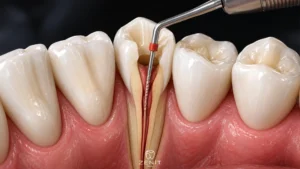
Can a root canal-treated tooth decay again?
Yes. Root canal treatment addresses the infected pulp tissue inside the tooth. New decay can still develop on the outer tooth structure.
Why does a root canal-treated tooth develop decay?
Plaque buildup, poor oral hygiene, leakage around fillings or crowns, and frequent consumption of sugary foods may contribute to new cavities.
Why does a root canal-treated tooth hurt?
Infection around the root, cracks, gum problems, or issues with the existing restoration may cause pain or discomfort.
What happens if a root canal-treated tooth breaks?
Depending on the size and location of the fracture, the tooth may be treated with a filling, crown, or another restorative option. Treatment possibilities may be more limited if the fracture extends deeply toward the root.
Can root canal treatment be performed again on the same tooth?
Yes, root canal retreatment may be possible in suitable cases. Whether retreatment is appropriate depends on the condition of the tooth and the findings obtained during examination and imaging.
How can the lifespan of a root canal-treated tooth be extended?
Regular brushing, interdental cleaning, avoiding excessively hard foods, checking restorations, and attending regular dental examinations can all contribute to the lifespan of a root canal-treated tooth.
Does a root canal-treated tooth have to be extracted?
No. Root canal treatment is performed specifically to preserve the natural tooth whenever possible. If a new problem develops, whether extraction is necessary depends on the extent and location of the damage.
Note: This content is intended for general informational purposes only. If you experience pain, swelling, fracture, or sensitivity in a root canal-treated tooth, a dental examination is necessary for individual diagnosis and treatment.