


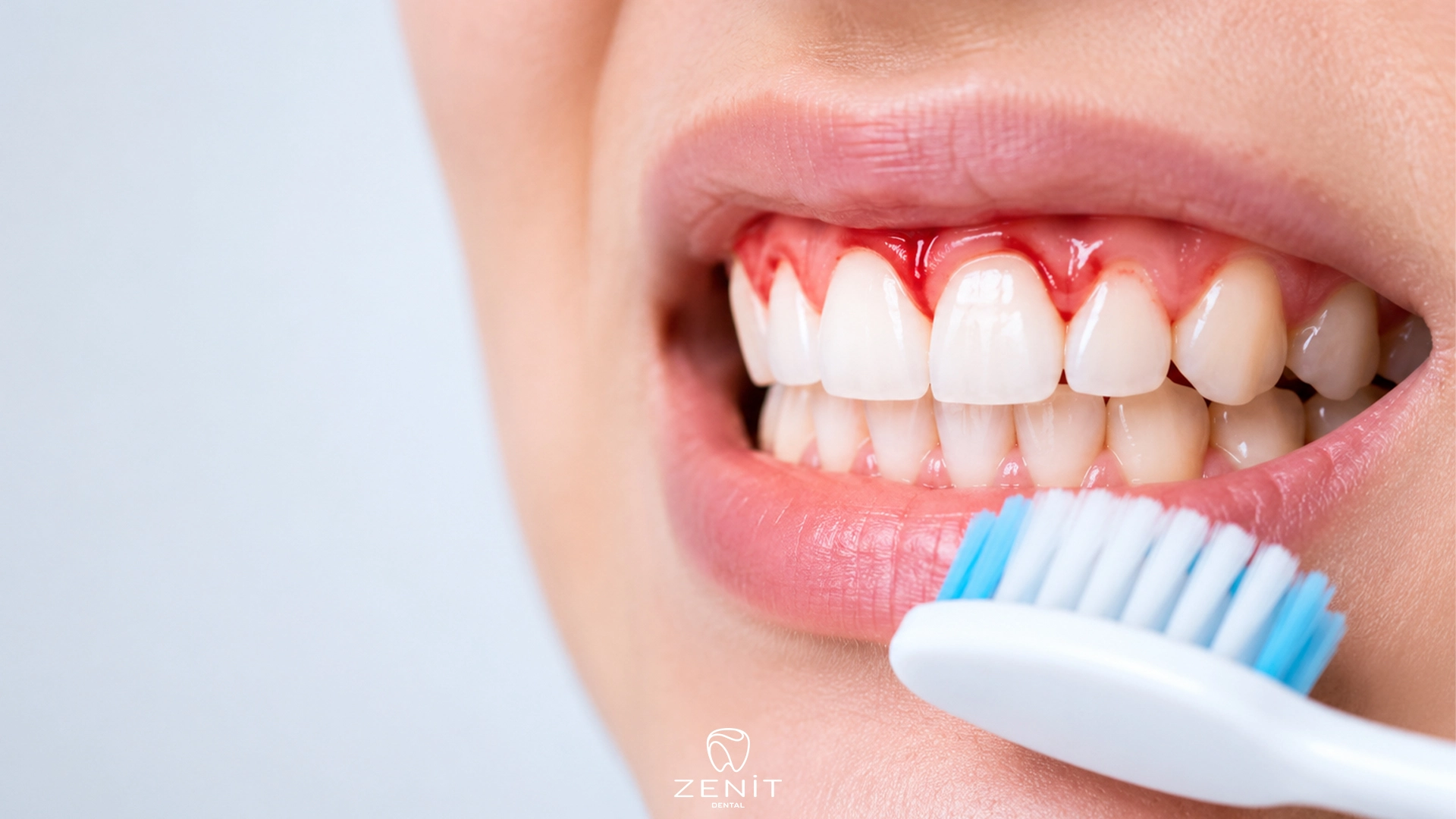
Bleeding Gums are an important oral and dental health symptom that may occur while brushing your teeth, flossing, eating hard foods, or, in some cases, spontaneously. Healthy gums are generally light pink, firm, and fit closely around the teeth. Persistent bleeding during routine oral care may indicate irritation of the gum tissue, plaque buildup, or an inflammatory process.
A single episode of mild Bleeding Gums may result from mechanical causes such as aggressive brushing. However, if the bleeding occurs frequently or is accompanied by other symptoms such as bad breath, redness, swelling, or gum recession, identifying the underlying cause is important. Early evaluation of gum disease may help prevent the development of more advanced periodontal problems.
What Are Bleeding Gums?
The gums are an important part of the oral tissues that surround and support the teeth. These tissues contain numerous small blood vessels. When the gums become irritated or inflamed, these blood vessels may become more sensitive, causing bleeding even with light contact such as brushing or flossing.
Bleeding Gums should not be considered a disease on their own. Instead, they may occur as a symptom of various conditions within the mouth. One of the most common causes is bacterial plaque that accumulates on tooth surfaces, particularly along the gumline.
When plaque is not removed regularly, it may harden over time and turn into tartar (dental calculus). Tartar cannot be completely removed through regular brushing at home and may cause ongoing irritation of the gum tissue.
What Causes Bleeding Gums?
There is no single answer to the question, “What causes Bleeding Gums?” Various factors, ranging from oral hygiene habits to certain medications, may contribute to gum bleeding.
Poor Oral and Dental Hygiene
Failing to brush the teeth regularly and correctly may cause bacterial plaque to accumulate, particularly between the teeth and along the gumline. As plaque buildup increases, inflammation, redness, and sensitivity may develop in the gums.
For this reason, maintaining a consistent oral hygiene routine plays an important role in protecting gum health.
Dental Plaque and Tartar Buildup
When plaque on the tooth surface is not removed in time, it may combine with minerals in saliva, harden, and turn into tartar.
Tartar buildup, especially around the gumline, may irritate the surrounding tissue and contribute to Bleeding Gums.
Established tartar deposits should be professionally evaluated and, when necessary, removed by a dentist.
Brushing Your Teeth Too Hard
The belief that brushing harder cleans the teeth more effectively is incorrect. Hard-bristled toothbrushes or excessive pressure while brushing may irritate the gum tissue.
In addition to bleeding, this may contribute over time to problems such as gum recession and tooth sensitivity.
Incorrect Flossing Technique
Dental floss is important for cleaning areas that a toothbrush cannot effectively reach. However, forcing the floss against the gums or using an incorrect technique may cause trauma to the tissue.
People who have recently started flossing may experience mild bleeding during the first few days. However, if the bleeding continues despite regular and proper flossing, a dental evaluation may be necessary.
Hormonal Changes
During periods of hormonal change, such as puberty, pregnancy, and menopause, the gums may become more sensitive to bacterial plaque.
During pregnancy in particular, some individuals may experience redness, swelling, and bleeding of the gums. For this reason, maintaining proper oral hygiene and attending appropriate dental check-ups should not be neglected during pregnancy.
Certain Medications and Systemic Conditions
Some medications may affect the tendency to bleed. In addition, certain systemic conditions, such as diabetes, blood-clotting disorders, and specific nutritional deficiencies, may also influence gum health.
Therefore, unexplained or persistent Bleeding Gums should not be considered solely an oral hygiene problem. A person’s general health and medications may also need to be taken into account during a dental evaluation.
What Are the Symptoms of Bleeding Gums?
Bleeding may sometimes occur on its own, while in cases of gum disease it may be accompanied by other symptoms.
Common signs to watch for include:
- Bleeding while brushing
- Bleeding while flossing
- Spontaneous gum bleeding
- Red or swollen gums
- Gum tenderness
- Persistent or recurring bad breath
- Gum recession
- Teeth appearing longer than usual
- Formation of pockets between the gums and teeth
- Tooth mobility in advanced cases
If one or more of these symptoms persist for an extended period, professional evaluation may be necessary.
The Relationship Between Bleeding Gums and Gingivitis
Gingivitis is one of the early stages of gum disease. It generally develops as an inflammatory response of the gum tissue to bacterial plaque buildup.
During gingivitis, redness, swelling, tenderness, and Bleeding Gums may occur.
At this stage, there is no loss of the bone tissue supporting the teeth. With appropriate oral hygiene and necessary professional dental care, gingivitis can often be brought under control.
However, ignoring the symptoms and allowing plaque buildup to continue may contribute to the progression of the condition into more advanced periodontal problems in some individuals.
Can Gingivitis Progress to Periodontitis?
Untreated gum inflammation may, in some cases, spread to deeper tissues. At this stage, a more serious periodontal disease known as periodontitis may develop.
With periodontitis, the pockets between the teeth and gums may deepen. The tissues and jawbone supporting the teeth may also become affected.
Advanced periodontal disease may cause symptoms such as:
- Gum recession
- Bone loss
- Tooth mobility
- Bad breath
- New spaces developing between the teeth
For this reason, persistent or recurring Bleeding Gums are among the symptoms that should be taken seriously at an early stage.
How Can Bleeding Gums Be Treated?
The answer to the question “How can Bleeding Gums be treated?” depends on the underlying cause of the bleeding.
If the problem is caused by an incorrect brushing technique, improving brushing habits may be sufficient. However, if tartar buildup or periodontal disease is present, professional dental treatment may be required.
Therefore, rather than simply trying to stop the bleeding, it is important to identify and address its underlying cause.
Professional Treatment Options for Bleeding Gums
A dentist will first evaluate the tissues inside the mouth. When necessary, periodontal pockets may be measured, and radiographic examinations may be used to assess the supporting structures.
The treatment method may vary depending on the severity and underlying cause of the problem.
Professional Tartar Removal
When tartar buildup is present, professional dental scaling may be performed.
This procedure aims to remove hardened plaque and tartar deposits that have accumulated on tooth surfaces and around the gumline.
Root Surface Cleaning and Periodontal Care
When gum disease has progressed into deeper areas, periodontal procedures may be planned to remove deposits from below the gumline and clean the root surfaces.
The extent of treatment is determined according to the patient’s periodontal condition.
Advanced Periodontal Treatments
In advanced cases of periodontitis, periodontal surgery or regenerative treatment options may be considered.
Because every patient’s oral structure and level of disease are different, the appropriate treatment method should be determined following a professional dental examination.
What Can Be Done to Prevent Bleeding Gums?
One of the most important ways to reduce the risk of Bleeding Gums is to establish a regular and proper oral hygiene routine.
Brush Your Teeth Regularly
Teeth should generally be brushed twice a day using an appropriate brushing technique. Instead of applying excessive pressure, controlled and gentle movements should be used.
Choose a Soft-Bristled Toothbrush
Very hard toothbrushes may irritate gum tissue. A dentist can provide recommendations regarding the most appropriate toothbrush according to individual oral health needs.
Clean Between Your Teeth
A toothbrush may not reach every surface between the teeth. Using dental floss or an appropriately sized interdental brush can help control plaque in these areas.
Do Not Neglect Regular Dental Check-Ups
Gum problems may not always cause noticeable symptoms in their early stages. Regular dental check-ups can help identify gum and periodontal problems before they become more advanced.
Avoid Tobacco Products
Smoking and other tobacco products have negative effects on periodontal health. Smoking may also affect blood circulation in the gums, making certain symptoms less noticeable.
Should You Brush Your Teeth When Your Gums Are Bleeding?
When bleeding is noticed, completely stopping tooth brushing is generally not the right approach. Discontinuing oral hygiene may lead to increased plaque buildup.
Instead, aggressive brushing should be avoided, a soft-bristled toothbrush should be used, and the teeth should be cleaned with gentle movements.
If the bleeding continues despite regular and appropriate oral care, a dental examination is recommended to determine the underlying cause.
When Should Bleeding Gums Be Taken Seriously?
A single episode of mild bleeding does not always indicate serious periodontal disease. However, a dental evaluation should not be delayed if any of the following occur:
- Bleeding repeatedly occurs
- Spontaneous bleeding develops
- Significant redness or swelling of the gums
- Gum recession
- Persistent bad breath
- Loose teeth
- Pain or discomfort while chewing
- Bleeding continues despite regular oral hygiene
Professional evaluation is particularly important when bleeding persists for an extended period or has no obvious cause.
Frequently Asked Questions About Bleeding Gums
Are bleeding gums normal?
Occasional mild bleeding may result from mechanical causes such as aggressive brushing. However, regularly recurring Bleeding Gums should not be considered normal, and the underlying cause should be evaluated.
Should I stop brushing my teeth if my gums bleed?
Generally, no. Completely stopping oral hygiene may increase plaque buildup. Cleaning should usually be continued using a soft-bristled toothbrush and gentler brushing movements.
Can salt water stop bleeding gums?
Warm salt water may temporarily help soothe oral tissues in some individuals. However, it does not treat underlying causes such as tartar buildup or periodontal disease. Therefore, it should not be used as a substitute for professional dental treatment.
Is it normal for my gums to bleed when I floss?
People who have recently started flossing may initially experience mild bleeding. However, if the bleeding continues despite correct and regular flossing, consulting a dentist is recommended.
Can tartar removal help with bleeding gums?
If the bleeding is caused by tartar buildup and associated gum inflammation, professional cleaning may be an important part of treatment. The appropriate procedure should be determined following a dental examination.
Can bleeding gums cause bad breath?
Plaque buildup and periodontal problems associated with gum bleeding may also be related to bad breath. If persistent bad breath and bleeding occur together, a professional dental evaluation may be beneficial.
Why do gums bleed during pregnancy?
Hormonal changes during pregnancy may cause the gums to react more sensitively to bacterial plaque. Maintaining proper oral hygiene and attending appropriate dental check-ups are important during this period.
Early Evaluation Is Important for Healthy Gums
Bleeding Gums are an oral health symptom that many people experience from time to time but should not be ignored when they become persistent. Plaque and tartar buildup, gingivitis, incorrect brushing habits, hormonal changes, and certain systemic factors may all play a role in the development of gum bleeding.
Regular tooth brushing, cleaning between the teeth, using appropriate oral care products, and attending regular dental check-ups can help maintain healthy gums.
If you experience recurring Bleeding Gums, gum recession, bad breath, swelling, or tooth mobility, identifying the underlying cause is important. Through a professional dental examination at Zenit Dental Center, the current condition of your gums can be evaluated and treatment options tailored to your individual needs can be planned.