


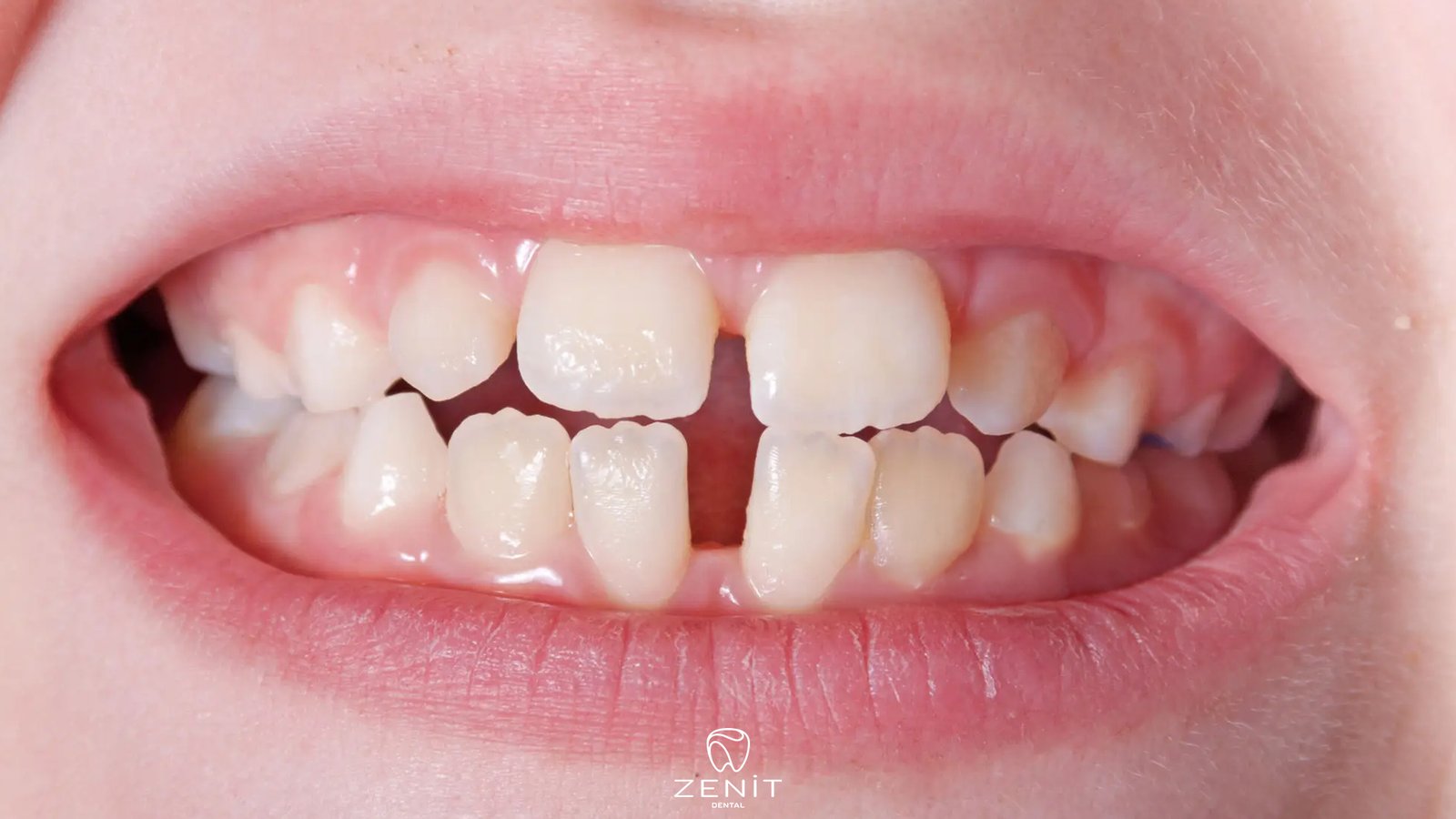
What is Diastema?
That little gap… the one you notice first when you look in the mirror, sometimes it bothers you, sometimes it makes you think “this is actually something unique about me.” That’s exactly what we call diastema. It’s especially noticeable when it appears between the upper front teeth, and most people simply describe it as “my teeth are a bit spaced.”
In most cases, diastema is actually a completely natural condition. It doesn’t always mean there’s a problem or something unhealthy going on. In fact, for some people it becomes such a characteristic part of their smile that it adds personality. Some don’t even want to change it, because it gives their expression a more distinctive and natural vibe.
But let’s look at it a little closer, in a simple and easy to understand way.
Diastema, in its simplest definition, is the presence of a larger than normal gap between teeth. This gap can appear in one area or between several teeth. Sometimes it’s so small you only notice it if you really pay attention, and other times it can be quite obvious when you smile.
The most common type is the gap between the upper front two teeth. So if you look in the mirror and see a space right between those two front teeth, that’s usually what we call diastema.
So why does this happen? There isn’t just one single reason. Sometimes it’s genetic, meaning it runs in the family. Other times it happens because of a mismatch between jaw size and tooth size. If the teeth are relatively small but the jaw is a bit wider, natural spaces can form between them.
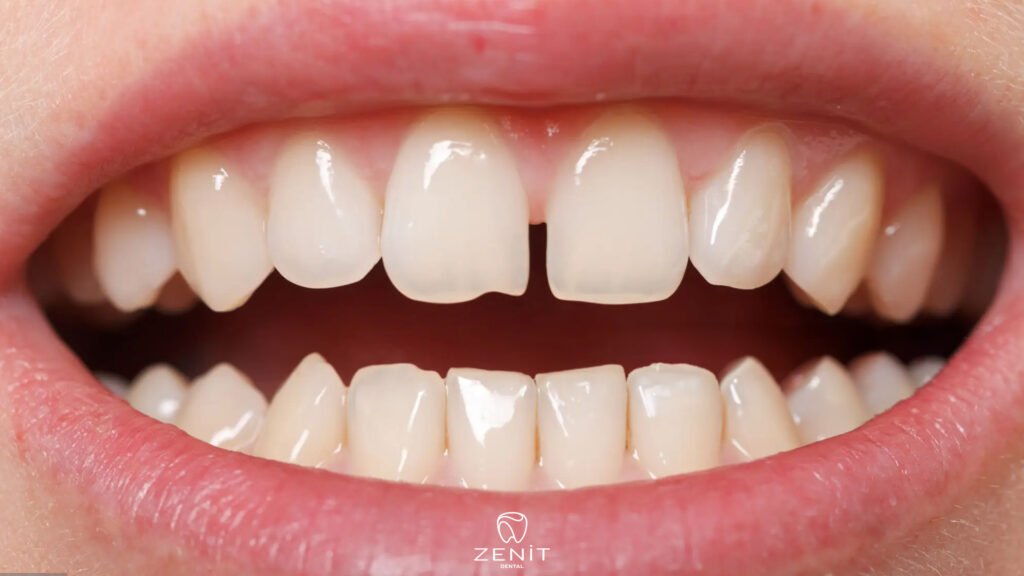
In some cases, childhood habits can also play a role. Things like prolonged thumb sucking, tongue thrusting, or certain gum issues may gradually lead to spacing between teeth over time. So diastema is not always something you’re born with; it can also develop through habits.
But here’s an important point: diastema doesn’t always need treatment. For some people, it’s purely an aesthetic choice. If someone is happy with their smile and has no functional issues, there’s often no need to intervene.
Still, some people may feel uncomfortable with the gap. Especially those who care about smile aesthetics may want to close it. Today, there are several treatment options available, and they depend on the individual case. But before that, the most important thing is understanding what it is and feeling comfortable with your own smile.
Causes of Diastema
When we look at the causes of diastema, there isn’t just one answer. In fact, it’s usually a combination of different factors that slowly create that space between the teeth. It’s rarely something that happens overnight; it develops gradually over time.
Let’s go through the main reasons in a simple, everyday way.
Jaw structure and tooth size mismatch
One of the most common reasons is exactly this. Think of your jaw as a “space” and your teeth as pieces that need to fit inside it. If the jaw is relatively wide but the teeth are a bit small, gaps can naturally appear even when the teeth are aligned. It’s not crowding, but rather “extra space.” This is usually a genetic and very natural cause.
Genetic factors
Some things really do come from family. Tooth shape, jaw structure, and even smile style can be inherited. If diastema exists in your family, there’s a higher chance you might have it too. That’s why sometimes you see similar smiles within families. It’s basically a natural inheritance.
Delayed loss of baby teeth
Things that seem small in childhood can actually have long term effects. If baby teeth don’t fall out at the right time, or if permanent teeth erupt in slightly different positions, the alignment can be affected. Over time, this can lead to spacing between teeth without anyone really noticing at first.
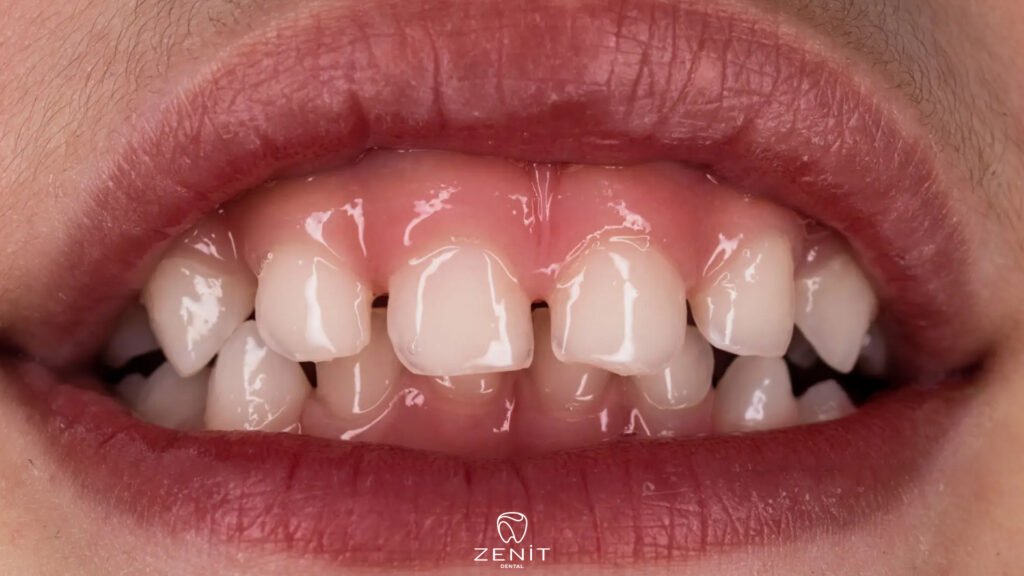
Habits
Some childhood habits can strongly affect tooth development. Thumb sucking or constantly pushing the tongue against the teeth can apply continuous pressure. Over time, this pressure can slowly move teeth and create gaps. Small habits, but sometimes big effects.
Gum disease
Gum health plays a very important role here. Advanced gum disease can weaken the tissues that hold teeth in place. When support decreases, teeth can start shifting, which leads to spaces forming between them. So it’s not just about the teeth, but also the foundation holding them.
Missing teeth
Sometimes certain teeth are missing from birth or are lost later in life. When that happens, other teeth may try to compensate, but they don’t always fully close the gap. As a result, small or noticeable spaces can remain, which also leads to diastema.
How is Diastema Treated?
Treatment really depends on how much the person is bothered by the gap and what the teeth actually need. There’s no single solution that fits everyone. For some, a small cosmetic touch is enough, while others may require longer and more comprehensive orthodontic treatments.
One of the most common and long lasting options is orthodontic treatment. Braces or clear aligners gradually move the teeth into the correct position over time. It requires patience, but the result is usually very natural because the teeth move into place on their own. For those who want a quicker option, composite bonding can be used. In this method, a tooth colored material is added between the teeth to close the gaps, often in just one session.
Another option is porcelain veneers. Thin layers are placed on the front surface of the teeth to close gaps and improve the overall appearance of the smile. It’s often preferred by people looking for a more durable and aesthetic solution. If the cause of diastema is a tissue issue like the upper lip frenum, a small surgical procedure may be done to correct it and prevent the gap from reappearing. Especially in children, early detection can make this more effective.
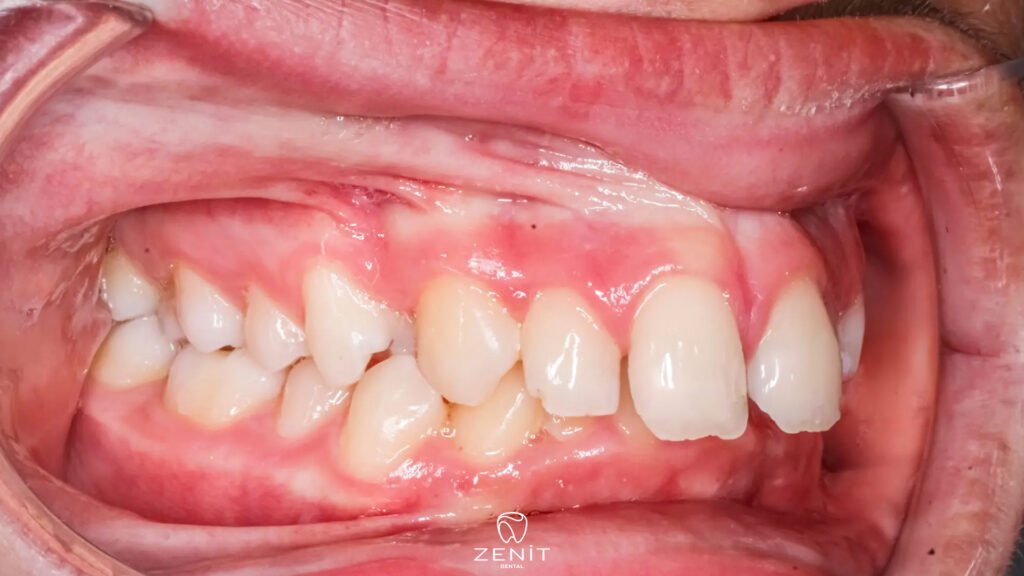
Is Diastema Normal in Children?
In children, diastema is often completely normal. In fact, it’s very common to see gaps between baby teeth. While it may worry parents at first, it usually doesn’t indicate a permanent problem. As children grow and permanent teeth start to come in, these gaps often close naturally.
Because of this, dentists usually don’t rush into treatment for children. Instead, they often prefer to monitor the development over time. Since the mouth and jaw are constantly changing, early intervention is not always necessary. In many cases, patience is the best approach.
When it comes to the psychological aspect, it really varies from person to person. Some people don’t mind the gap at all and even see it as a unique feature of their smile. For them, it’s not a flaw but a personal trait. Others, however, may feel self conscious, especially in a time where aesthetic appearance is emphasized so much.
With social media and the idea of a “perfect smile” becoming so popular, more people are paying attention to dental aesthetics. This has made conditions like diastema more noticeable in conversations. But it’s important to remember that a beautiful smile is not just about perfectly aligned teeth…
Comments are closed