


What is Orthognathic Surgery?
Orthognathic surgery is often the first thing that comes to mind when people hear the term “jaw surgery.” However, this definition only reflects the visible part of the treatment. In reality, the jaw structure is not just an aesthetic detail; it is a critical balance that affects speech, chewing, breathing, and even posture.
Many people live their daily lives without even realizing this. But when there is a misalignment in the jaw structure, it gradually starts to show itself in different ways. For example, difficulty chewing, constant mouth breathing, inability to pronounce certain sounds clearly, or a noticeable facial asymmetry… This is exactly where orthognathic surgery comes into play, offering not only an aesthetic correction but also a functional improvement.
This treatment process is usually not considered a standalone operation. It is planned together with orthodontic treatment and involves a detailed, step by step process. The goal is not only to “correct” the jaw, but to harmonize the jaw, teeth, and facial skeleton as a whole. In this way, the patient achieves both improved chewing function and a naturally balanced facial appearance.
What makes this surgery special is exactly this: it can improve not only appearance but also quality of life. For many patients, this process marks the end of a period they have long been used to, often without realizing they were struggling.
Orthognathic surgery, although often perceived from the outside as a purely aesthetic procedure, is actually based on important functional reasons. The jaw structure is one of the most critical elements of facial balance, and even a small imbalance can affect daily life much more than expected.
Why is Orthognathic Surgery Necessary?
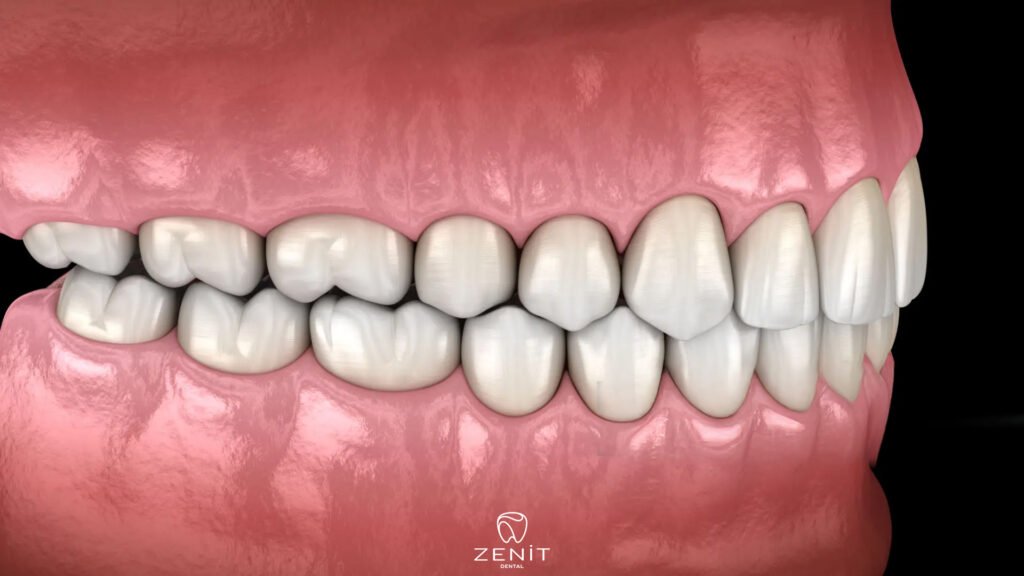
Every person has a different jaw structure, which is completely normal. However, in some individuals, the lower jaw may be positioned significantly forward or backward compared to the upper jaw. Sometimes, even if the jaws look “normal” from the outside, there can still be serious bite misalignments. Over time, these conditions stop being just an aesthetic issue and turn into a problem that directly affects quality of life.

For example, difficulty while chewing may cause a person to feel tired even while eating. Some people notice that they cannot pronounce words clearly when speaking. More importantly, serious problems such as mouth breathing during sleep, snoring, or sleep apnea may occur. These conditions affect not only the person but also their sleep quality and overall health.
In addition, jaw joint pain can gradually lead to headaches. Some patients also experience clicking sounds in the jaw joint, which can become disturbing in daily life. Uneven distribution of force on the teeth may cause excessive wear and, in the long term, significant dental damage.
Considering all these reasons, orthognathic surgery is often not just an “optional aesthetic procedure,” but rather a medically necessary treatment. The goal is not only to change facial appearance, but to improve fundamental functions such as chewing, speaking, and breathing.
How is Orthognathic Surgery Performed?
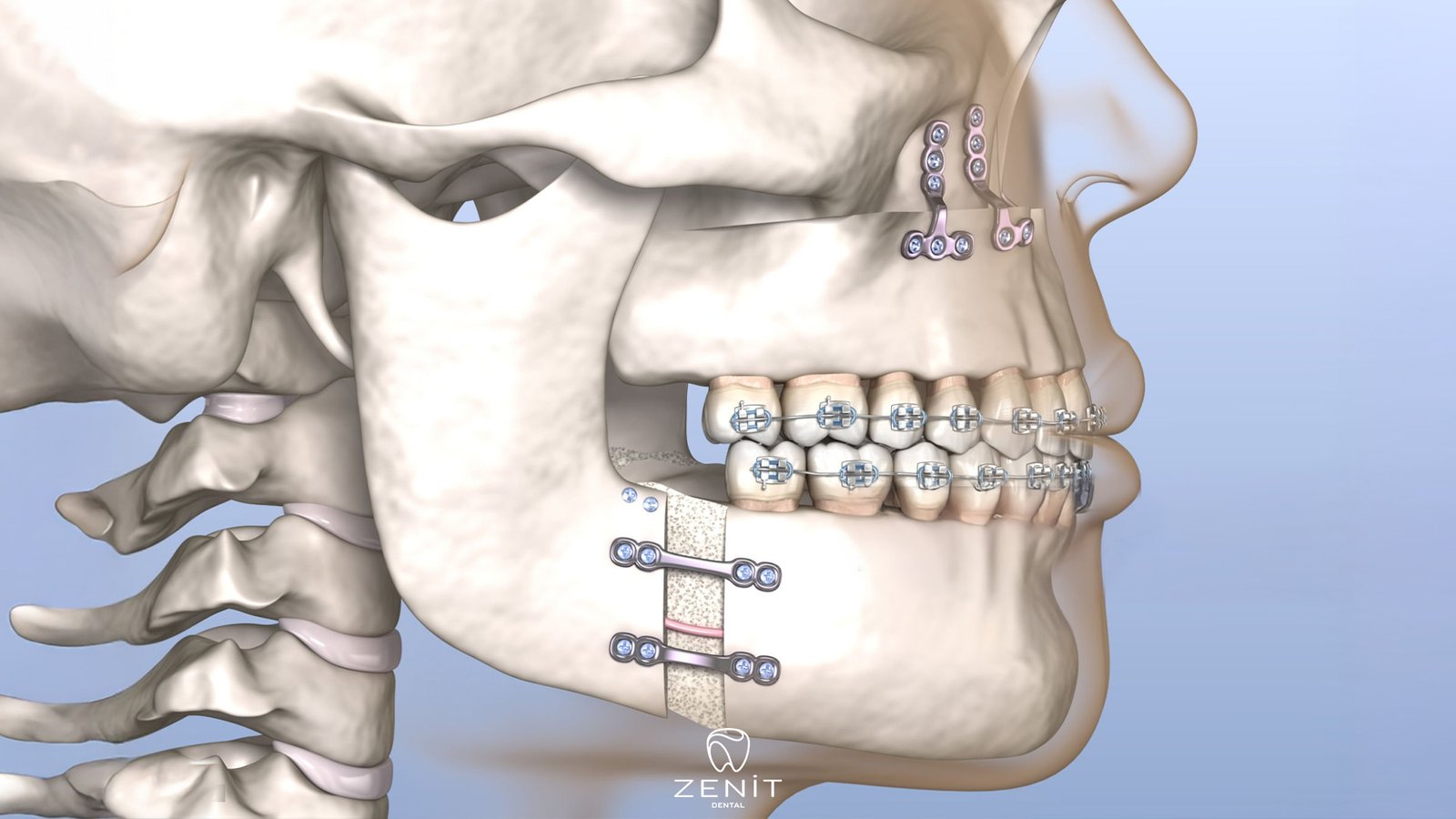
Orthognathic surgery is generally, contrary to common belief, a carefully planned, controlled, and multi stage process. The surgical operation itself is only one part of this process.
This procedure is performed under general anesthesia. In other words, the patient is completely asleep and feels no pain or discomfort during the operation. According to a detailed preoperative plan, the surgeon makes controlled cuts in the jawbones. This may sound frightening at first, but in reality, it is a highly precise repositioning process based on millimetric calculations.
After the jawbone is moved into its ideal position, it is fixed using special plates and small screws. These materials remain permanently in the body and help stabilize the jaw in its new position during healing.
One of the most important points is that orthognathic surgery is never performed randomly. The goal is not to enlarge or reduce the jaw; instead, it is to bring the jaw and facial skeleton into natural harmony. Facial balance, bite alignment, and function are all considered as a whole.
In some patients, only the lower jaw is treated, while in others, the upper jaw or both jaws may be repositioned. The approach depends entirely on the individual’s facial structure, bite condition, and needs. Creating a personalized treatment plan for each patient is one of the most important aspects of this procedure.
Advantages of Orthognathic Surgery
Orthognathic surgery results are often not limited to changes visible in the mirror. The real differences appear in small but important details of daily life.
One of the most common things patients say after this process is: “I wish I had done it earlier.” Because the change is felt not only in appearance but in overall quality of life.
One of the most noticeable benefits is improved facial balance and harmony. When the jaw is correctly positioned, the facial expression becomes more natural and balanced. However, the more important aspect is functional comfort.
Reduced difficulty in eating and improved chewing comfort make daily life significantly easier. Clearer speech also positively affects both self confidence and social interaction.
Another important issue is sleep quality. Jaw correction can help improve airway function, leading to reduced snoring and more regular breathing patterns. For patients with serious conditions like sleep apnea, this improvement can make a major difference in quality of life.
Additionally, jaw joint pain is often reduced because the jaw functions more evenly, and unnecessary stress on the joint is significantly decreased.
Who is it Suitable For?
Orthognathic surgery is not a standard procedure for every patient. In other words, not everyone needs this treatment; it requires a fully individualized evaluation.
Generally, this surgery is considered for patients with more severe jaw misalignments. For example, a lower jaw that is significantly forward or backward compared to the upper jaw can cause not only aesthetic but also functional problems.
In some cases, even after long term orthodontic treatment, an ideal bite cannot be achieved. In such situations, orthognathic surgery is considered to properly align the jaw structure.
It may also be an important option for patients with airway related breathing problems. Conditions such as snoring or sleep apnea during sleep can sometimes be directly related to jaw structure.
Additionally, patients with noticeable facial asymmetry may benefit from jaw repositioning both aesthetically and functionally.
However, the most important point is this: the decision should never be based on self observation. Instead of wondering “Could I have this too?”, the most accurate approach is to undergo a detailed evaluation by a specialist.
Comments are closed