


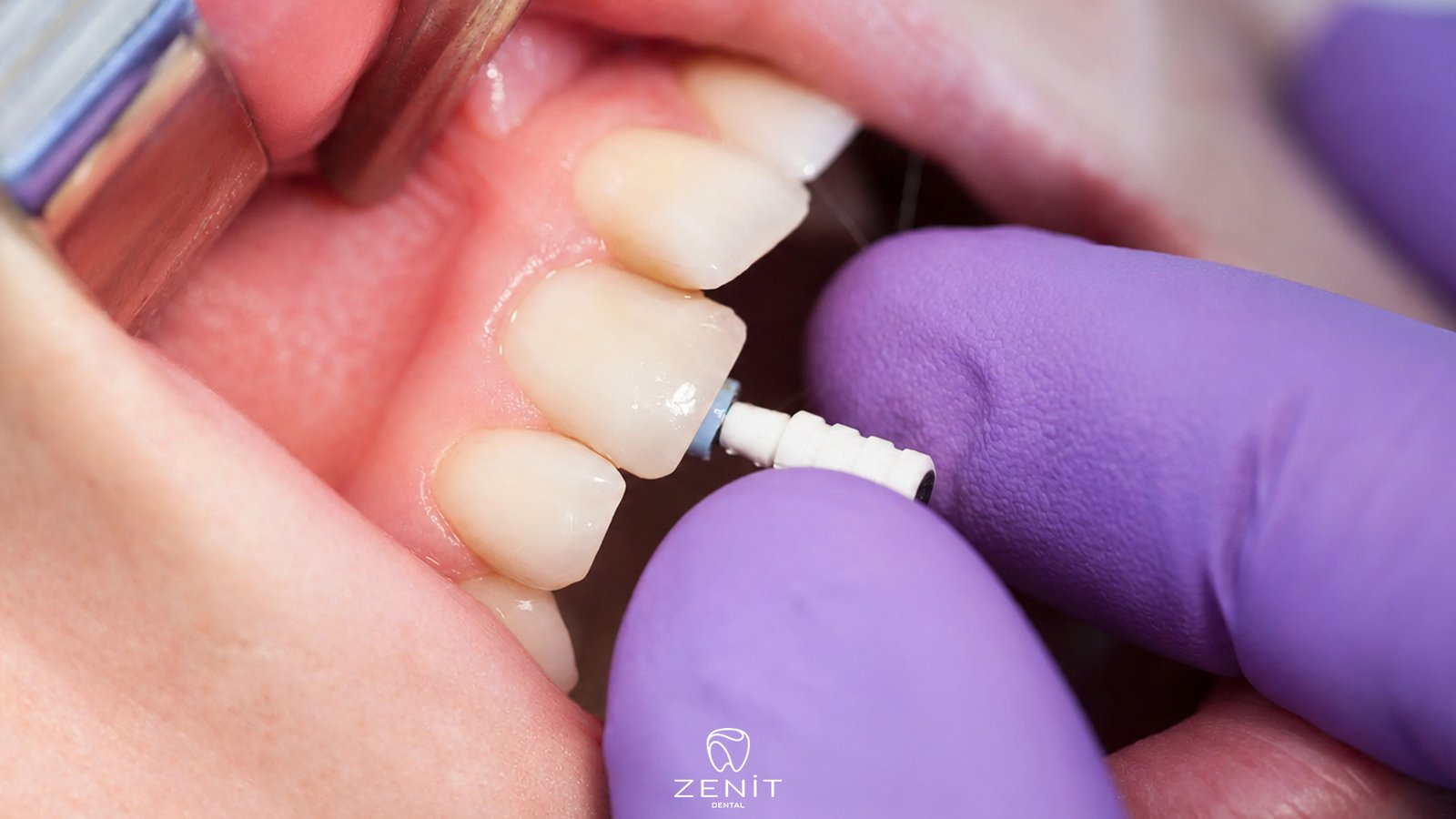
Fiber Post Treatment
When dental treatments are mentioned, most people first think of fillings, crowns, implants, or tooth extractions. However, in some cases, invisible heroes step in to save a tooth. Fiber post treatment is one of them. This method is especially used in teeth that have experienced significant structural loss after root canal treatment, helping to reinforce the tooth and allowing it to function healthily in the mouth for many years.
Over time, teeth can suffer substantial tissue loss due to decay, fractures, trauma, or old restorations. Teeth that have undergone root canal treatment may also become more fragile because they lose their vitality. In such cases, placing a filling alone may not always be sufficient. Additional support may be needed to ensure that a crown or restoration can be securely retained. This is exactly where fiber post application comes into play.
A fiber post is a special material placed inside the root canal to provide internal support to the tooth. The goal is not only to restore the tooth but also to preserve as much of the remaining natural tooth structure as possible and extend the lifespan of the tooth in the mouth. One of the most important goals of modern dentistry is to preserve natural teeth whenever possible. Keeping your own tooth is often far more advantageous than alternative treatment options.
Many people assume that fiber post treatment is a complex or painful procedure. In reality, it is generally a comfortable treatment that is performed on top of an existing root canal treatment. Most patients can quickly return to their daily routines. Moreover, when properly planned, fiber post treatment can reduce the risk of fracture, improve the durability of crowns and restorations, and help maintain the tooth’s function for many years.
What Is a Fiber Post?
Some teeth have spent years battling decay, have fractured, or have undergone multiple dental procedures. Particularly in teeth that have received root canal treatment, a significant amount of healthy tooth structure may be lost over time. In such situations, restoring the tooth with only a filling may not always be enough. Even if the tooth appears strong from the outside, a lack of internal support can increase the likelihood of future fractures.
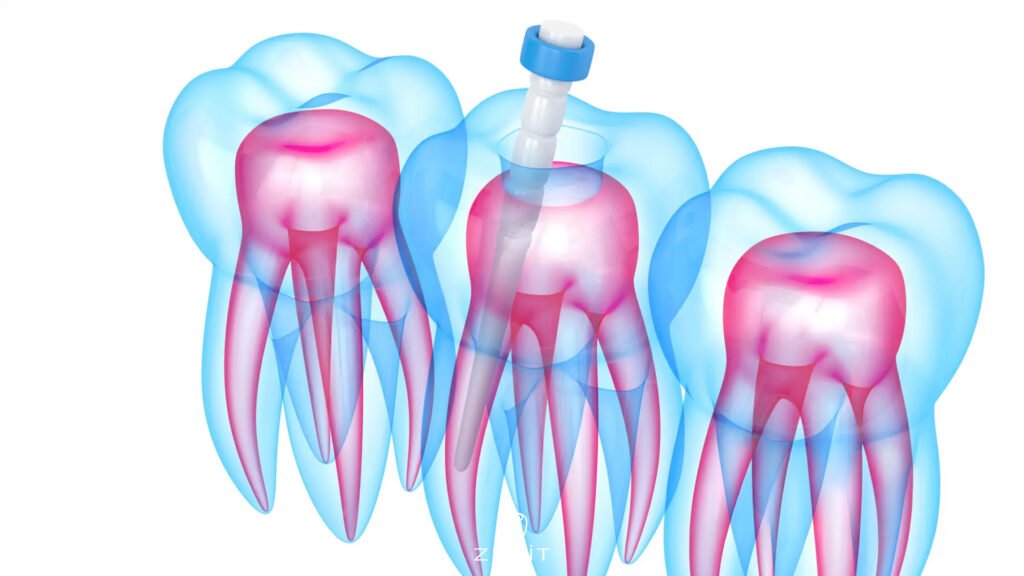
A fiber post is a specialized reinforcement system used in these situations. It is placed inside the root canal of a tooth that has undergone root canal treatment, helping to strengthen the tooth from within. This creates a more stable foundation for the filling or crown that will be placed on top.
You can think of a fiber post as a hidden support structure that helps keep a weakened tooth standing strong. It is not visible from the outside, but it plays an important role in improving the durability of the tooth. For teeth that have suffered extensive structural loss, it is a valuable option for preserving the natural tooth.
Today, the goal of dentistry is not only to repair damaged areas but also to preserve as much of the patient’s natural tooth structure as possible. Fiber post application is an important part of this philosophy. When used in suitable cases, it can help a weakened tooth regain its function and remain healthy in the mouth for many years.
Why Is a Fiber Post Necessary?
Root canal treatment is one of the most effective ways to save an infected or damaged tooth. However, the process does not end once the treatment is completed. Teeth that have undergone root canal treatment may become more delicate and prone to fracture compared to healthy natural teeth. This is especially true when a large portion of the tooth structure has been lost due to extensive decay.
In some cases, the amount of remaining healthy tooth structure is not sufficient to achieve long term success with a filling or crown alone. Additional support may be required to strengthen the tooth. The primary purpose of fiber post treatment is exactly this: to provide internal reinforcement and help the tooth withstand the daily forces of chewing.
Fiber posts can be particularly beneficial when there is significant structural loss after root canal treatment, when a large fracture is present, or when extensive restorations have weakened the tooth over the years. They are also commonly used in teeth that require a crown but lack sufficient supporting tooth structure. In molars, where chewing forces are greater, fiber posts may help reduce the risk of fracture.
Of course, not every tooth that has undergone root canal treatment requires a fiber post. Some teeth retain enough healthy structure to support a restoration without additional reinforcement. For this reason, the decision is always based on the specific condition of the tooth. After a detailed examination and necessary imaging, the dentist evaluates how much healthy tooth structure remains and determines the most appropriate treatment plan.
How Is a Fiber Post Applied?
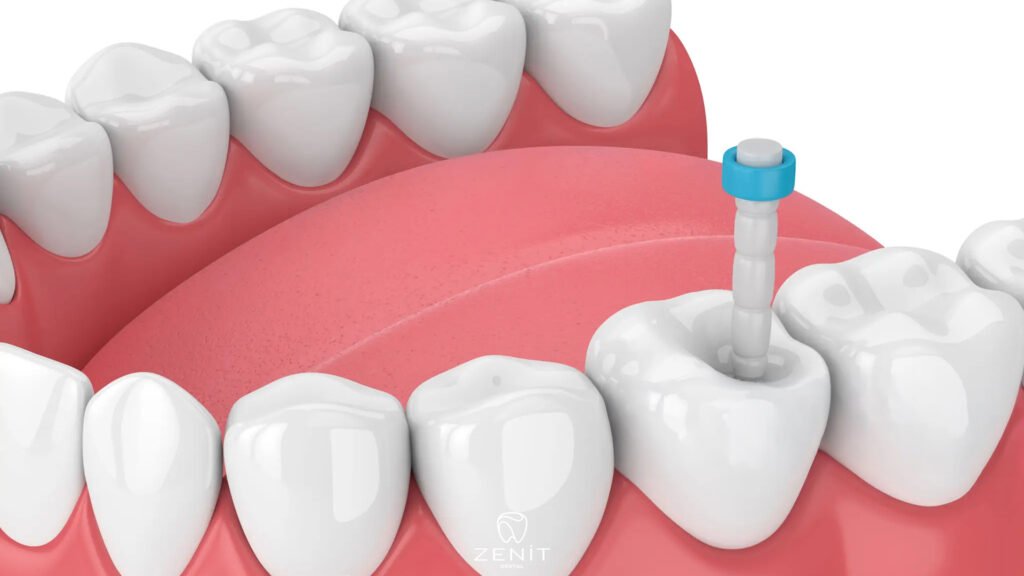
Fiber post treatment is generally a comfortable procedure that can often be completed in a single appointment. Before beginning the treatment, the dentist carefully evaluates the tooth that has undergone root canal treatment and determines whether it is suitable for a fiber post.
During the procedure, a portion of the root canal is prepared using specialized instruments. A fiber post of the appropriate size is then selected and carefully bonded into the canal using advanced adhesive systems. This provides internal reinforcement for the tooth.
After the fiber post has been placed, the missing tooth structure is rebuilt using aesthetic restorative materials. This helps restore both the strength and natural appearance of the tooth. In some cases, a porcelain crown may be recommended afterward to provide long-term protection and support.
Patients generally do not experience pain or discomfort during the procedure. Since the treatment is typically performed on teeth that have already undergone root canal therapy, the process is often much more comfortable than patients expect.
What Are the Advantages of Fiber Posts?
One of the main reasons fiber post applications have become increasingly popular in recent years is the many advantages they offer to both dentists and patients. As modern dentistry continues to focus on preserving natural teeth whenever possible, fiber posts have become a reliable reinforcement option in many clinical situations.
Compatible with Natural Tooth Structure
One of the most important features of fiber posts is their flexibility, which closely resembles that of natural tooth structure. This allows chewing and biting forces to be distributed more evenly across the tooth during daily function. By preventing excessive stress from concentrating on a single area, a healthier and more balanced use of the tooth can be achieved.
Provides a More Aesthetic Appearance
Aesthetic appearance is especially important in the front teeth. Some metal based supports used in the past could cause dark discoloration or shadows around the gum line over time. Fiber posts, on the other hand, transmit light in a way that is more similar to natural tooth structure, helping to achieve a more natural and aesthetic result.
For this reason, they are frequently preferred for restorations in the visible front tooth region.
Helps the Tooth Remain Stronger
Teeth that have undergone root canal treatment may require additional support during everyday use. Since a fiber post is placed within the root canal, it helps preserve the remaining tooth structure and provides a stronger foundation for the restoration.
Thanks to this support, the likelihood of maintaining the tooth in a healthy and functional condition for many years may increase.
A Comfortable and Practical Procedure
Many people may assume that the treatment process will be difficult. However, fiber post application is generally a quick procedure, allowing patients to return to their daily routines shortly afterward. Most individuals can comfortably resume their normal activities following treatment.
A Safe, Metal Free Option
It contains no metal. This not only offers aesthetic advantages but also provides a reassuring alternative for individuals who have sensitivities or allergies related to metal materials.
How Long Does a Fiber Post Last?
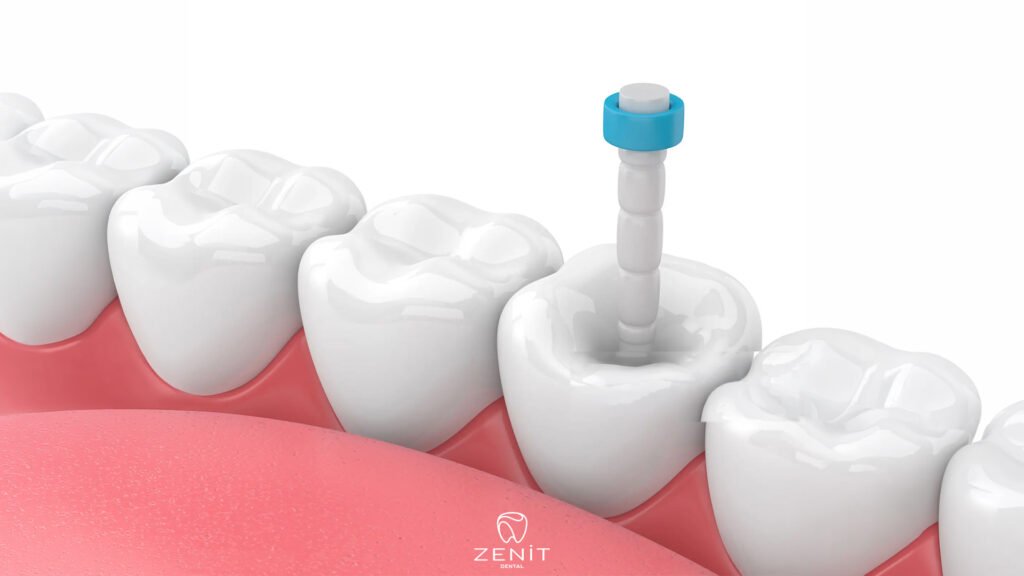
One of the most common questions patients ask is how long a fiber post can last. In reality, there is no single answer that applies to everyone. The lifespan of a fiber post depends not only on the materials used but also on the individual’s oral hygiene habits and how they use their teeth.
Maintaining good oral hygiene after treatment, brushing at least twice a day, and attending regular dental check ups can help preserve the results for many years. In addition, people who clench or grind their teeth may place greater stress on their teeth, which may require additional protective measures.
The success of a fiber post restoration also depends on proper treatment planning and the quality of the filling or crown placed over it. When all these factors are in place, teeth restored with fiber posts can function successfully for many years.
It is even possible to see successful results lasting more than 10 years in some patients. However, because every individual has different oral conditions, chewing habits, and daily care routines, it is not possible to provide an exact lifespan. The best approach is to maintain regular oral care and routine dental check ups to ensure the long term success of the fiber post restoration.